 Digitnomics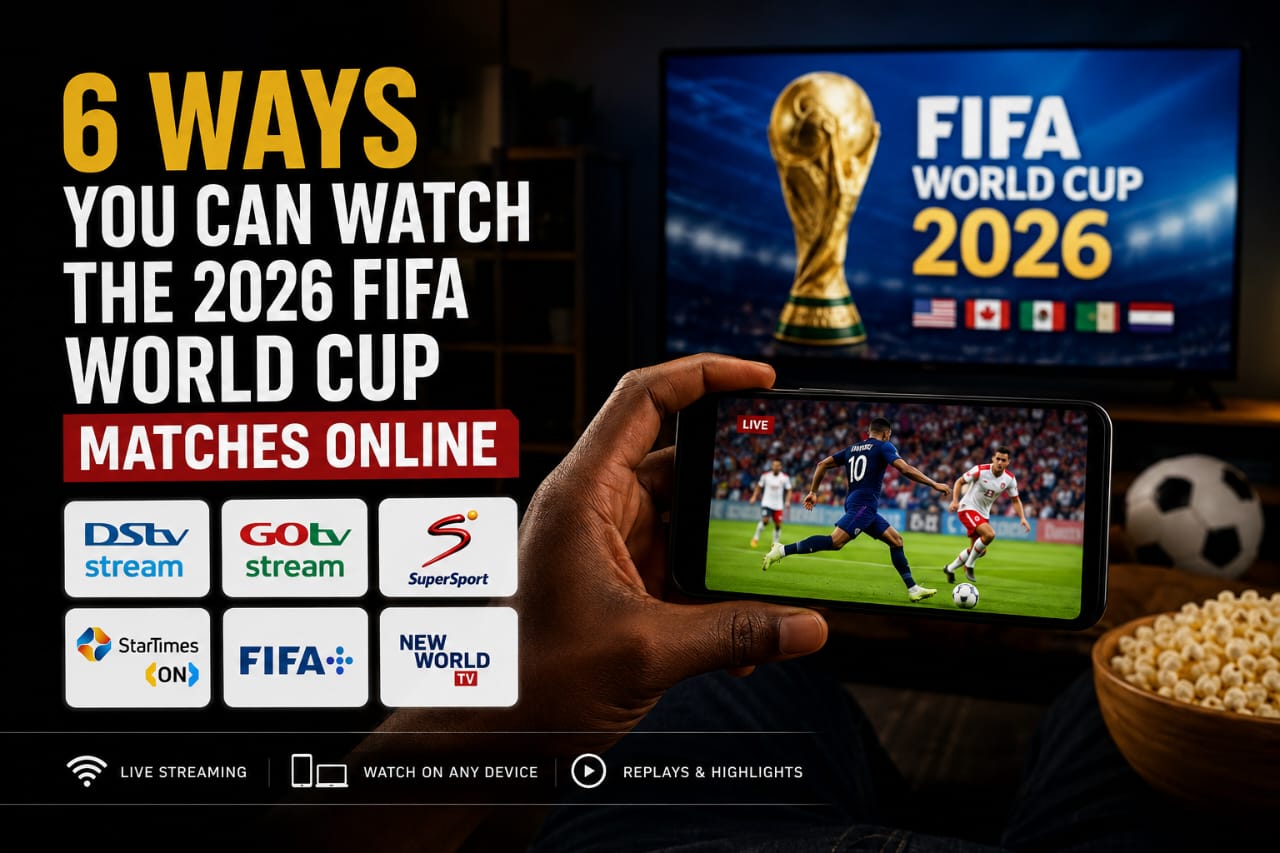
By Chinemerem Victor,
As the 2026 FIFA World Cup kicks off on June 11, millions of football fans across Nigeria are preparing for what promises to be the biggest tournament in the competition’s history.
Hosted across the United States, Canada, and Mexico, the tournament will feature 48 national teams for the first time, expanding the number of matches from 64 to 104 and creating unprecedented demand for digital streaming services.
For Nigerian viewers, the growth of online broadcasting platforms means fans no longer need to rely solely on traditional television to follow the action. From dedicated sports streaming apps to mobile-first platforms, several services will offer live coverage of matches throughout the tournament.
Digital Platforms Set to Benefit from World Cup Demand
The World Cup remains one of the world’s most-watched sporting events, attracting billions of viewers globally and generating significant traffic for streaming platforms, telecom operators, and digital content providers.
Industry analysts expect mobile streaming consumption across Africa to surge during the competition as younger audiences increasingly choose smartphones, tablets, and connected TVs over traditional broadcast channels.
With matches scheduled across multiple time zones, many fans are also expected to rely on on-demand replays, highlights, and digital companion services to stay updated.
Streaming Options Available to Nigerian Viewers
DStv Stream
MultiChoice’s DStv Stream platform will provide access to all World Cup matches for eligible subscribers.
The service allows users to stream live games on smartphones, tablets, laptops, and smart televisions while also offering match replays and highlights on demand.
For many Nigerian football fans, DStv remains the primary destination for premium sports content, particularly major international tournaments.
GOtv Stream
GOtv subscribers can also follow the tournament through the GOtv Stream application.
The platform offers a lower-cost alternative for viewers who want access to live matches without a premium satellite television package.
Existing subscribers can use their current account credentials to access the streaming service.
SuperSport App
For viewers seeking deeper football coverage, the SuperSport App provides live scores, statistics, expert analysis, and commentary alongside match broadcasts.
The platform serves as a companion experience for DStv and GOtv users, helping fans follow player performances, tournament standings, and match insights in real time.
StarTimes ON
StarTimes ON is expected to be one of the most affordable streaming options available to Nigerian viewers during the tournament.
The service offers live sports content through mobile devices, tablets, and smart TVs, making it attractive to younger audiences and budget-conscious football fans.
Its lower subscription pricing could help drive increased adoption during the World Cup period.
FIFA+
FIFA’s official streaming platform, FIFA+, will provide access to selected content, including highlights, documentaries, interviews, and behind-the-scenes coverage.
While licensing restrictions may limit access to some live matches in Nigeria, the platform remains an important destination for supplementary tournament content and exclusive FIFA productions.
New World TV
New World TV has secured rights to broadcast selected World Cup matches across Sub-Saharan Africa.
The broadcaster is expected to offer free access to a portion of the tournament’s fixtures, making it a key option for viewers seeking legal, no-cost alternatives for following the competition.
Technology Behind the Tournament
Beyond football, the 2026 World Cup is expected to be a major test of digital infrastructure and streaming technology.
With more than 100 matches spread across 39 days, streaming providers will need to manage enormous spikes in traffic while maintaining video quality and platform stability.
Telecommunications operators are also likely to experience increased data consumption as fans stream matches on mobile networks.
A single high-definition football match can consume several gigabytes of data, making data affordability and network reliability important factors for viewers throughout the tournament.
Storylines Driving Global Interest
The tournament arrives with several major narratives expected to attract audiences worldwide.
Football legends Lionel Messi and Cristiano Ronaldo could be making their final World Cup appearances, while younger stars such as Kylian Mbappé and Lamine Yamal are expected to play leading roles on the global stage.
Argentina enters the competition as defending champions, seeking to become the first nation since Brazil in 1962 to successfully retain the World Cup trophy.
For Africa, the tournament marks a historic milestone with ten nations participating, the continent’s largest representation ever at the competition.
Although Nigeria failed to qualify, football fans across the country are still expected to follow the tournament closely, particularly the performances of African teams such as Morocco, Senegal, Ghana, Algeria, Ivory Coast, Egypt, South Africa, Tunisia, Cape Verde, and DR Congo.
The Bigger Picture
The 2026 FIFA World Cup highlights the growing intersection between sports, technology, and digital media.
As streaming increasingly becomes the preferred way to consume live sports, the tournament is expected to drive significant engagement across digital platforms, create new revenue opportunities for broadcasters, and further accelerate the shift toward online viewing.
For Nigerian fans, the challenge may not be finding where to watch the games but deciding which platform offers the best combination of affordability, accessibility, and viewing experience.