
Apple Fuels Global Smartphone Revenue Growth as Consumers Spend More on Premium Devices
 Digitnomics
By Francisca Anuforo
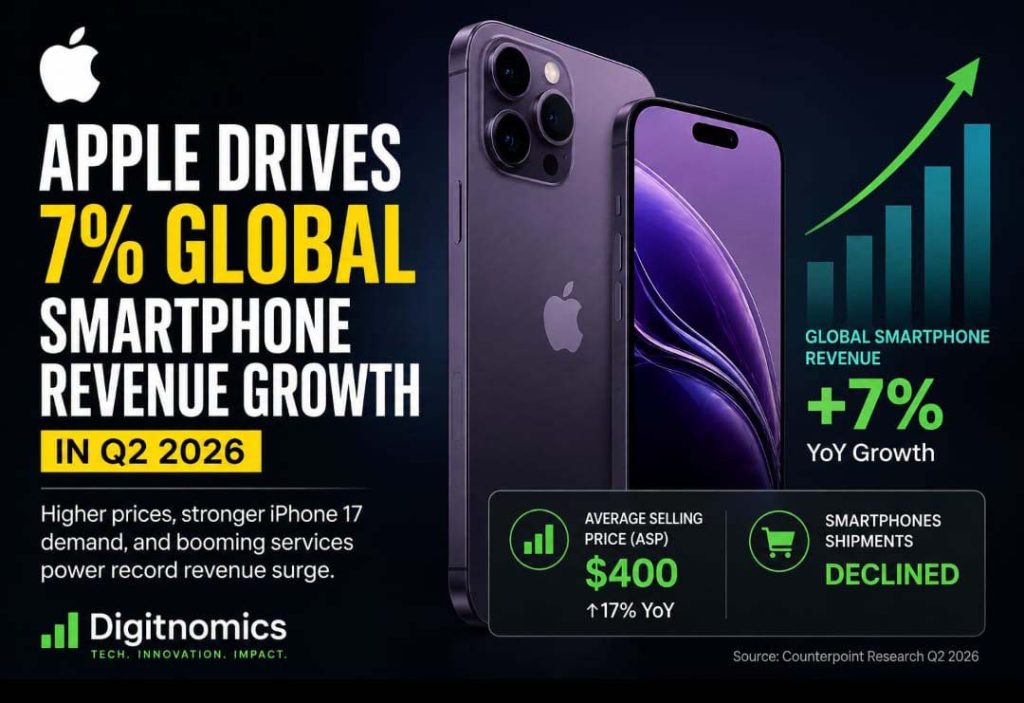
Apple has emerged as a major driver of global smartphone revenue growth in the second quarter of 2026, despite a decline in overall smartphone shipments, according to the latest market data from Counterpoint Research.
The report shows that global smartphone revenue increased by 7 percent year-on-year, while the average selling price (ASP) of smartphones climbed 17 percent to a record $400 for a second quarter.
The figures highlight a significant shift in consumer behaviour, with more buyers opting for premium smartphones over budget devices. Although fewer smartphones were sold during the period, consumers spent considerably more on each purchase, boosting industry revenue.
Apple and Samsung, which dominate the premium smartphone market outside China, were the biggest beneficiaries of this trend.
For Apple, strong demand for the iPhone 17 series, combined with continued growth in its services ecosystem, helped strengthen its financial performance. The company’s services business—which includes subscriptions, cloud storage, digital payments, and content services—continues to generate substantial recurring revenue and remains one of the world’s most profitable digital platforms.
The latest market data follows Apple’s impressive financial results earlier this year, when the company reported $111.2 billion in quarterly revenue and $29.6 billion in net profit, underlining the resilience of its premium business strategy.
Premium smartphones continue to dominate
Industry analysts say rising component costs, particularly memory chips, have narrowed the price gap between entry-level and premium smartphones. As a result, many consumers are choosing to invest in higher-end devices that offer better performance, longer software support, and stronger resale value.
This trend has reduced growth at the lower end of the market while strengthening demand for flagship smartphones from leading manufacturers.
For Apple, the strategy extends beyond hardware sales. The company has built a tightly integrated ecosystem where customers who purchase an iPhone are more likely to subscribe to services such as cloud storage, music streaming, payments, and other digital offerings.
As more users remain within Apple’s ecosystem, the company continues to generate recurring revenue long after the initial smartphone purchase.
Industry outlook
Counterpoint Research believes the premiumisation trend is likely to continue as consumers prioritise quality, durability, and long-term value over cheaper alternatives.
If the pattern persists, smartphone manufacturers with strong premium portfolios and robust software ecosystems—particularly Apple and Samsung—are expected to remain the biggest winners, even in periods when global smartphone shipments soften.


 Chinenye Anuforo