Airtel Launches Africa’s First Commercial Satellite-to-Mobile Service With Starlink
 Digitnomics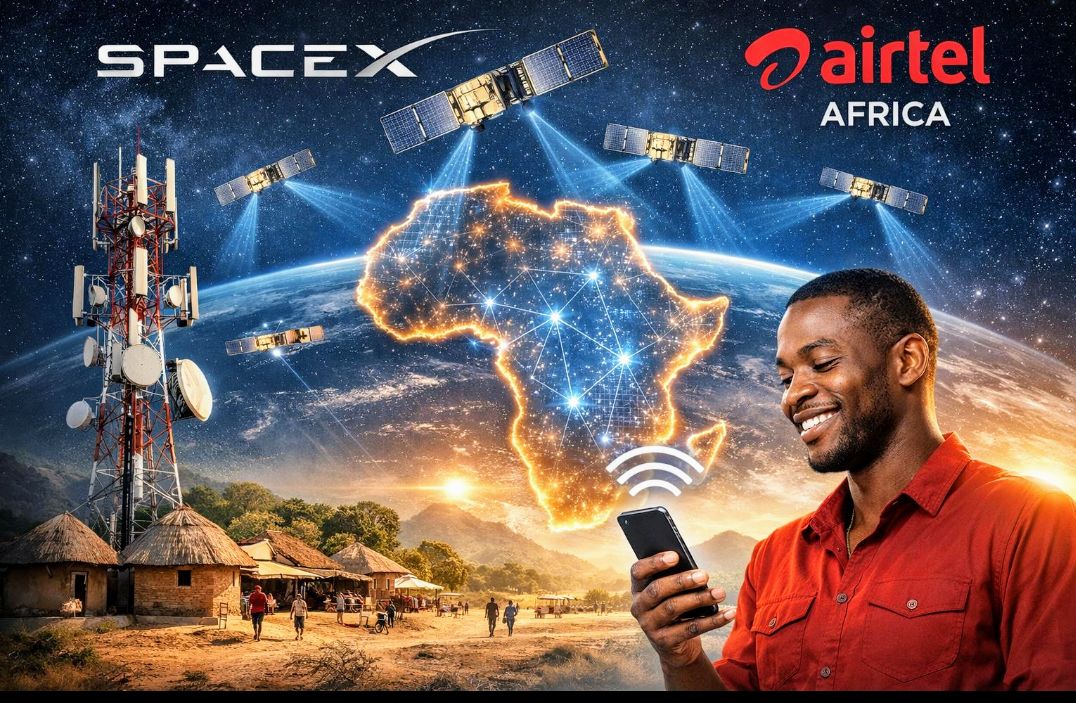
Airtel has launched a commercial satellite-to-mobile service in the Democratic Republic of the Congo (DRC) in partnership with SpaceX’s Starlink, marking a major development in Africa’s telecommunications industry.
The deployment makes the DRC the first Airtel Africa market where the Starlink Direct-to-Cell service has moved into commercial operation.
Connecting Phones Where Towers Cannot Reach
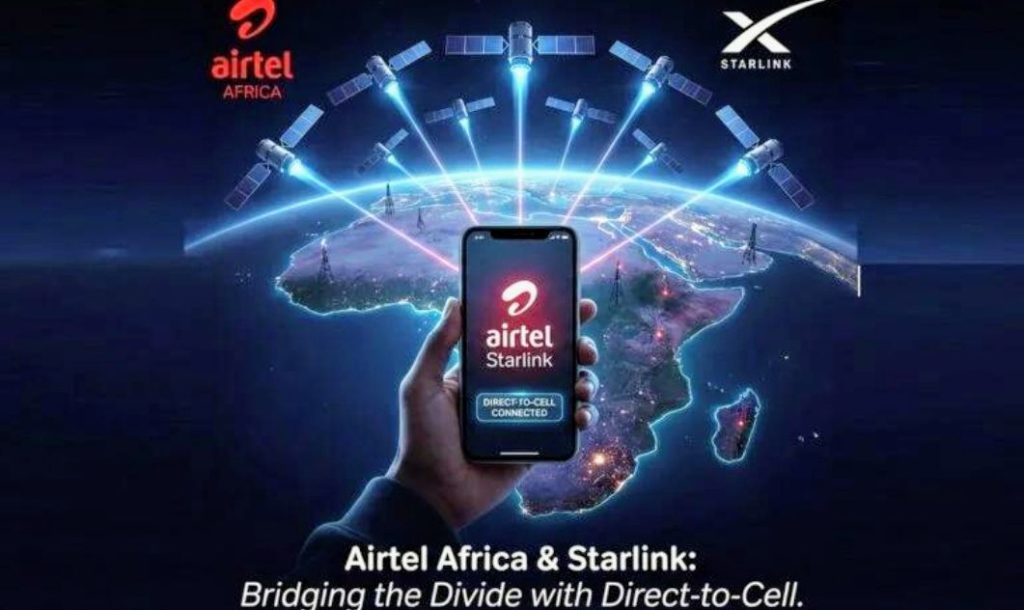
The service allows compatible smartphones to connect directly to Starlink satellites in locations where conventional mobile networks are unavailable.
This means users in remote areas can access basic mobile connectivity without waiting for a traditional telecom tower to be built.
At the initial stage, the service supports SMS and selected light-data applications. Connectivity has also been demonstrated for applications such as WhatsApp in areas without terrestrial network coverage.
For a country as large and geographically challenging as the DRC, the technology could provide an alternative way of reaching communities that are difficult or expensive to connect using traditional infrastructure.
Why The DRC Matters
The DRC continues to face significant connectivity challenges, particularly in rural and remote communities.
For telecom operators, expanding coverage into sparsely populated areas can require substantial investment in towers, fibre, power infrastructure and maintenance.
Direct-to-Cell technology offers a different approach. Instead of building a tower in every hard-to-reach location, compatible phones can communicate with satellites overhead.
Airtel DRC Managing Director Thierry Diasnova said the service would provide an additional layer of connectivity for customers in areas where terrestrial coverage is unavailable.
From Testing In Kenya To Commercial Deployment
The commercial launch follows Airtel Africa’s agreement with SpaceX to introduce Starlink Direct-to-Cell connectivity across its African markets.
The companies began testing mobile data and messaging services in Kenya in March 2026, helping to establish the technology before the DRC commercial rollout.
Airtel Africa has said the partnership is intended to eventually extend satellite connectivity across its 14 markets, subject to regulatory approvals in individual countries.
That means the DRC launch could serve as a blueprint for how the technology is introduced in other Airtel markets.
Nigeria Could Be Part Of The Next Phase
Nigeria is one of Airtel Africa’s markets covered by the broader Starlink Direct-to-Cell partnership.
However, commercial availability of the service in Nigeria will depend on regulatory approvals and Airtel Africa’s rollout plans.
The technology could eventually become particularly useful for communities, roads and other locations where conventional mobile infrastructure remains difficult to deploy.
Airtel Is Not Alone
The satellite-to-mobile race is beginning to attract several African telecom operators.
MTN Zambia has completed field testing of Starlink’s Direct-to-Cell technology, while AXIAN Telecom has partnered with AST SpaceMobile to explore satellite-based broadband connectivity directly to standard smartphones.
These developments point to a significant shift in Africa’s telecom landscape: mobile connectivity may increasingly depend on both towers on the ground and satellites in space.
For millions of Africans living outside reliable terrestrial coverage, that could change what it means to be connected.
Digitnomics Take
The bigger story is not simply that Airtel has launched a new service in the DRC. It is that Africa’s connectivity infrastructure is beginning to move beyond the traditional model of building more towers.
If satellite-to-mobile technology becomes commercially viable at scale, a smartphone could potentially stay connected in places where building a conventional network would be too expensive or geographically difficult.
The next question is no longer whether satellites can connect directly to phones.
It is how quickly regulators, telecom operators and satellite companies can make that connectivity available across Africa.