
Nigeria’s Telecom Market Hits 200 Million Lines After 70 Million SIM Disconnections, but Internet Access Lags
 Digitnomics
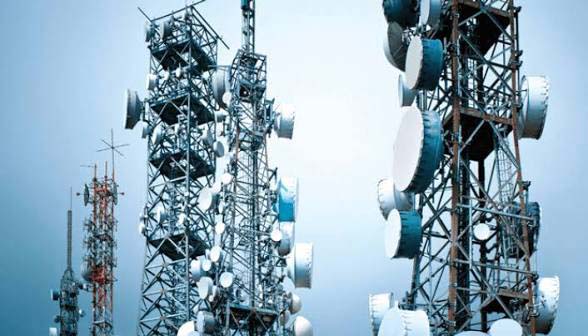
Nigeria’s telecommunications industry has crossed the 200 million active subscriber milestone nearly two years after the Federal Government’s National Identification Number (NIN)-SIM enforcement exercise triggered the disconnection of approximately 70 million telephone lines.
However, while the recovery signals renewed growth in the telecommunications market, the gap between active telephone connections and internet subscriptions highlights persistent challenges around broadband affordability, smartphone ownership and digital inclusion.
Latest industry statistics from the Nigerian Communications Commission (NCC) show that active telephone subscriptions increased to 200.3 million in September 2026, from 197.4 million in August, representing an addition of 2.9 million connections within one month.
The milestone marks the first time Nigeria’s telecommunications industry has crossed the 200 million threshold since the mass disconnections of 2024, which significantly reduced the country’s active telephone lines.
Before the enforcement exercise, Nigeria had 224.7 million active telephone lines in December 2023. However, the figure plunged to 154.9 million by September 2024 after operators deactivated millions of SIM cards that failed to meet the government’s NIN-linkage requirements.
The latest figures indicate that operators have gradually rebuilt their subscriber bases through new SIM registrations, reactivations and growing demand for mobile connectivity.
Yet, the recovery in telephone subscriptions has not translated into comparable internet access, raising questions about how effectively Nigeria’s expanding telecommunications infrastructure is supporting digital inclusion.
While active telephone connections reached 200.3 million in September, internet subscriptions stood at 160.9 million, increasing from 158.5 million in August.
Mobile network operators accounted for approximately 160.4 million of the internet subscriptions, demonstrating the dominant role of telecommunications infrastructure in delivering internet access across Nigeria.
MTN Nigeria led with 86.5 million internet subscribers, followed by Airtel with 57.2 million. Globacom accounted for 15.9 million, while T2mobile recorded 810,010.
The figures highlight the importance of mobile networks to the country’s digital ecosystem, where millions of Nigerians depend on mobile internet for banking, digital payments, education, e-commerce, communication and entertainment.
However, having an active SIM card or access to a mobile network does not necessarily mean that a consumer can afford consistent internet connectivity.
The cost of internet-enabled smartphones, mobile data subscriptions and reliable broadband services remains a significant consideration for households, particularly low-income consumers.
In rural communities, inadequate telecommunications infrastructure and inconsistent network quality further constrain access to digital services.
The challenge is becoming more significant as economic opportunities and essential services increasingly migrate online, making affordable and reliable internet access an important requirement for participation in the digital economy.
Meanwhile, Nigeria’s mobile data consumption remains elevated, despite a slight moderation in September.
The NCC data showed that total data consumption stood at 1.731 million terabytes in September, compared with 1.756 million terabytes in August. September nevertheless recorded the second-highest monthly consumption level.
The sustained demand reflects growing reliance on digital platforms for video streaming, social media, online transactions, entertainment and other bandwidth-intensive activities.
Nigeria’s transition towards faster mobile network technologies is also progressing, although adoption remains relatively modest.
The NCC’s September statistics showed that 5G market share increased to 5.05 per cent from 4.92 per cent in August, crossing the five per cent threshold for the first time since the commission began tracking the technology in May 2023.
In contrast, 3G market share declined to 4.16 per cent from 4.27 per cent, indicating a gradual migration towards newer network technologies.
Despite the improvement, the relatively low 5G market share highlights the gap between infrastructure deployment and widespread consumer adoption.
The cost of compatible smartphones, network availability and the affordability of high-speed internet services will influence the pace of adoption.
Telecommunications operators are expanding infrastructure to improve network quality and accommodate increasing data traffic.
Airtel Nigeria’s Chief Executive Officer, Dinesh Balsingh, disclosed during the company’s Open Network launch that the operator had deployed more than 1,000 5G telecom towers in 2026 as part of its investment drive.
MTN has also continued investing in network infrastructure to improve connectivity and expand capacity.
However, infrastructure expansion alone may not resolve Nigeria’s digital access challenges without addressing the economic barriers that prevent millions of people from using internet services consistently.
The telecommunications market’s return to 200 million active lines is therefore only one part of Nigeria’s broader digital development story.
Improving broadband affordability, expanding rural network coverage, increasing access to internet-enabled devices and strengthening digital literacy will be critical to translating subscriber growth into meaningful digital inclusion.
For Nigeria’s digital economy, the bigger challenge is no longer simply connecting more telephone lines, but ensuring that more citizens can affordably and reliably access the internet to participate in commerce, education, financial services and other opportunities.