Banks Can Detect SME Loan Distress Before Default, Says Mathesis Analytics CEO
 Digitnomics
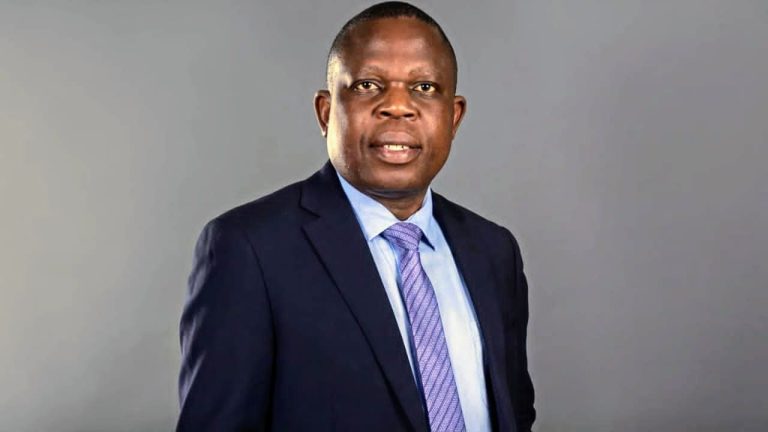
Nigerian banks and other financial institutions can identify signs of financial distress among small and medium-sized enterprises (SMEs) weeks or months before a missed loan payment by analysing borrowers’ cash-flow behaviour in real time, Winston Osuchukwu, Founder and Chief Executive Officer of Mathesis Analytics Inc., has said.
Osuchukwu said traditional credit systems often rely heavily on fixed borrower information and periodic assessments, making it difficult for lenders to detect subtle changes in a business’s financial position before the borrower defaults.
According to him, a missed loan repayment is rarely the first indication that an SME is experiencing financial difficulties.
He identified four cash-flow signals that lenders should monitor more closely: slower vendor payment velocity, the illusion of liquidity, rising outflow concentration and a deteriorating cash buffer ahead of repayment.
Osuchukwu explained that persistent delays in vendor payments could indicate growing pressure on an SME’s working capital, even when the business remains up to date on its loan obligations.
He noted that while a single delayed payment may not mean much, a pattern of increasingly late payments could provide an early indication that the business is struggling to manage its cash flow.
“For instance, if a business that historically settles with a primary vendor on the 25th of the month starts slipping to the 28th, and eventually into the next month, working capital is distressed,” he said.
Osuchukwu also warned lenders against relying solely on account balances when assessing the financial health of SME borrowers.
He said a healthy-looking balance on a loan repayment date may not necessarily reflect the borrower’s underlying repayment capacity.
According to him, businesses experiencing cash-flow pressure may temporarily raise the balance in their primary account by borrowing elsewhere or delaying payments to creditors before a loan repayment is due.
He added that lenders could also lose visibility into an SME’s financial position when the business spreads its deposits and transactions across multiple banks.
“Without a consolidated, real-time view of both when and where money is moving, lenders face a dual risk: penalising a healthy business because they cannot see the full picture, or missing genuine liquidity signals because one account looks fine in isolation,” he said.
The Mathesis Analytics CEO further identified changes in spending patterns as another potential early warning signal.
He said a sudden increase in payments to a smaller group of vendors, greater reliance on short-term financing or rising transfers from a primary business account could indicate tightening working capital.
However, Osuchukwu stressed that such patterns should not automatically be interpreted as financial distress.
He cited seasonal businesses as an example, noting that some companies naturally experience periods of concentrated spending due to the nature of their operations.
“A seasonal business, for example, such as a hibiscus aggregator heavily consolidating cash to pay farmers during the short harvest window, naturally experiences concentrated expenditure,” he said.
The challenge, according to him, is for lenders to determine whether a change in spending represents a significant departure from the borrower’s historical behaviour.
He said intelligent credit-scoring systems could compare current cash-flow patterns with historical data to distinguish normal seasonal activity from potentially problematic changes.
Osuchukwu also pointed to the relationship between available cash and upcoming financial obligations as another important indicator.
He said an SME could continue meeting its loan repayments while its operational cash buffer steadily declines.
Traditional credit systems, he noted, may confirm that sufficient funds were available when a repayment was due but fail to capture the deterioration in liquidity between repayment dates.
“A business that historically held a comfortable multi-week cash cushion is now nearing zero after the repayment clears. The borrower has not defaulted yet, but their cash buffer has vanished,” he said.
Osuchukwu argued that the real value of cash-flow monitoring lies in combining multiple signals rather than reacting to individual anomalies.
He said an isolated delayed payment or unusual inflow may not necessarily indicate financial distress, but several negative indicators occurring simultaneously could provide a clearer picture of deteriorating liquidity.
“This is where an intelligent decisioning layer becomes invaluable. By aggregating multiple sources of transactional data, lenders can establish a behavioural baseline for every SME,” he said.
Such systems, he added, could enable banks and other lenders to distinguish temporary disruptions from more persistent financial problems.
Osuchukwu said earlier detection could also give financial institutions more time to intervene before a loan becomes seriously delinquent.
Rather than waiting for missed payments before taking action, he said lenders could consider measures such as restructuring facilities, extending loan tenures or engaging borrowers when early warning signs emerge.
He stressed that the use of real-time cash-flow intelligence should complement, rather than replace, existing credit infrastructure.
“The goal is not to replace established credit infrastructure. Nor is it to trigger false alarms over temporary disruptions. It is to make existing systems more responsive,” Osuchukwu said.
He argued that converting granular cash-flow data into actionable intelligence could help financial institutions manage credit risk while potentially expanding lending to SMEs that may be overlooked by conventional underwriting models.
For Nigeria’s financial sector, where SMEs remain an important part of economic activity and employment, the increasing use of transaction data and digital credit analytics could therefore provide lenders with additional tools for assessing businesses beyond traditional credit checks.