
Nigeria Could Spend $3.5bn Annually On Cloud Services As Government Pushes Local Data Hosting
 Digitnomics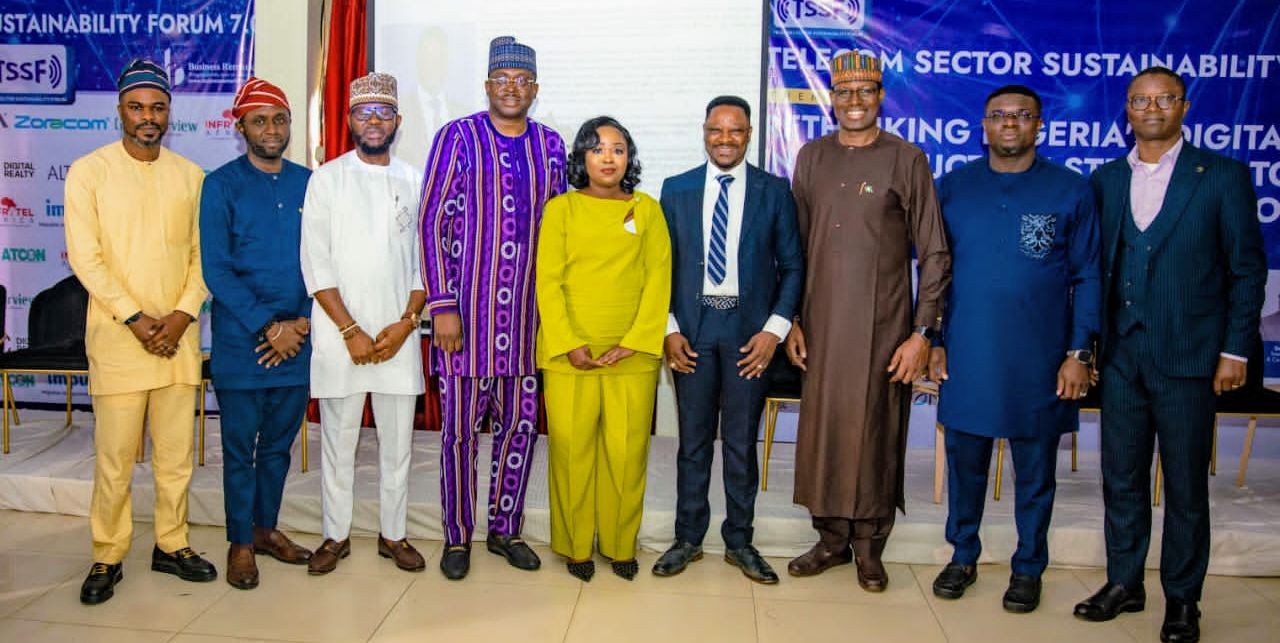
By Admin
Nigeria could see annual government spending on cloud services rise from about $1 billion to $3.5 billion if the remaining 70 per cent of government agencies adopt cloud services within the next five years, according to Engr. Ike Nnamani, Chief Executive Officer of Digital Realty Nigeria and Co-chair of the National Cloud Initiative Technical Working Group.
Nnamani disclosed this at the 7th Telecom Sector Sustainability Forum (TSSF 7.0), organised by Business Remarks in Lagos, where stakeholders examined Nigeria’s digital infrastructure deficit and its implications for investment, innovation and economic growth.
He said only about 30 per cent of Nigeria’s approximately 1,000 government agencies currently use cloud services, with annual spending estimated at about $1 billion.
However, rather than allowing the growing expenditure to continue flowing to foreign providers, Nnamani said Nigeria needs to develop local cloud capacity and keep critical data within the country.
He disclosed that more than 80 per cent of Nigeria’s sovereign data is currently hosted outside the country, describing the situation as a significant national risk.
According to him, dependence on foreign infrastructure exposes critical national services to potential disruptions, particularly where data and digital systems are hosted in jurisdictions outside Nigeria’s control.
Nnamani said the National Cloud Initiative is designed to address the challenge by establishing a framework for hosting critical categories of data, including financial and national security information, within Nigeria.
The initiative has four key pillars covering regulation, implementation guidelines, governance and monitoring, and an investment guarantee framework.
Under the proposed framework, government procurement would prioritise certified local cloud service providers before foreign alternatives are considered.
Nnamani stressed that the government would not operate the infrastructure but would create the policy and regulatory environment required for private-sector investment.
“Government is not going to run this, but it’s going to create all the enabling policies and guidelines to make it happen while the private sector takes the initiative to implement it,” he said.
He also called on Nigerian technology companies and entrepreneurs to position themselves for opportunities in cloud services, data migration, systems integration and related digital infrastructure.
Nnamani said local cloud providers would have to meet the same security and quality standards expected of international providers.
“Whatever you get in AWS in New York, you should be able to get from a local company in Nigeria. The same quality, the same standard,” he said.
He further disclosed that none of the major hyperscalers, including Amazon, Oracle, Meta and Microsoft, currently operates a data region in Nigeria, meaning some Nigerian data must be processed through infrastructure outside the country.
The situation, he said, represents both a digital infrastructure challenge and a potential opportunity for investors as Nigeria seeks to build a stronger domestic cloud ecosystem.
Despite its large population and digital market potential, Nnamani said Nigeria has yet to translate its size into a correspondingly large digital economy.
“We are the biggest in Africa from a telephonic standpoint, but when you check internet traffic flow, we are behind South Africa and even Kenya,” he said.
Beyond cloud infrastructure, stakeholders at the forum identified funding, right-of-way charges, spectrum costs, regulatory fragmentation and inadequate infrastructure sharing as major constraints to Nigeria’s digital expansion.
The Chief Operating Officer of WTES Group, Chidi Ajuzie, said broadband penetration remained around 57 per cent despite mobile penetration of approximately 90 per cent.
He identified capital constraints, right-of-way challenges and regulatory fragmentation as key barriers to fibre deployment.
Ajuzie said some states still charge as much as N10,000 per metre for right-of-way, compared with the agreed N145 benchmark.
He argued that high right-of-way charges reduce the capital available to operators for network expansion and discourage investment in fibre infrastructure.
He called for a model that treats right-of-way as an enabler of economic activity rather than simply a source of immediate government revenue.
On spectrum, Ajuzie advocated a shift from heavy upfront charges towards output-based models that allow more capital to be deployed into infrastructure.
Industry experts at the forum estimated that Nigeria could require approximately $100 billion over the next 30 years to close its digital infrastructure deficit.
They also estimated that the country could remain 10 to 15 years away from achieving greater parity with developed markets unless investment and deployment are significantly accelerated.
The stakeholders called for a clearer commercial framework for infrastructure sharing, better mapping of existing infrastructure and stronger collaboration among telecom operators, infrastructure providers and regulators.
They also highlighted digital skills as a critical component of the country’s digital transformation, calling for increased investment in artificial intelligence, machine learning, cloud computing and other emerging technologies.
On cybersecurity, the panel argued that security should be built into digital infrastructure from the planning stage rather than treated as an additional layer after deployment.
The Chairman of the Association of Licensed Telecommunications Operators of Nigeria (ALTON), Gbenga Adebayo, said the telecom sector had made significant contributions to Nigeria’s development over more than 25 years.
He called on stakeholders to better communicate the sector’s contributions to education, businesses and the wider economy while urging continued collaboration to address emerging challenges.
ALTON’s Executive Secretary and Chief Operating Officer, Ajibola Olude, said Nigeria’s digital economy would require not only infrastructure but also a pipeline of skilled professionals and greater connectivity in underserved communities.
He also raised concerns about the high cost of capital, noting that interest rates above 30 per cent make financing digital infrastructure particularly difficult.
The forum’s convener and Managing Editor of Business Remarks, Bukola Olanrewaju, said the event was convened to move beyond discussions and develop actionable responses to Nigeria’s digital infrastructure deficit.
The 7th Telecom Sector Sustainability Forum was held under the theme, “Rethinking Nigeria’s Digital Infrastructure Strategy to Attract Investment and Drive Innovation.”
Stakeholders concluded that expanding local cloud infrastructure, improving broadband access, reducing deployment costs, strengthening cybersecurity and creating investment-friendly policies would be critical to unlocking Nigeria’s digital economy.