 Digitnomics

Law decides whether capital comes, stays and earns. Africa’s next rise will be won there.
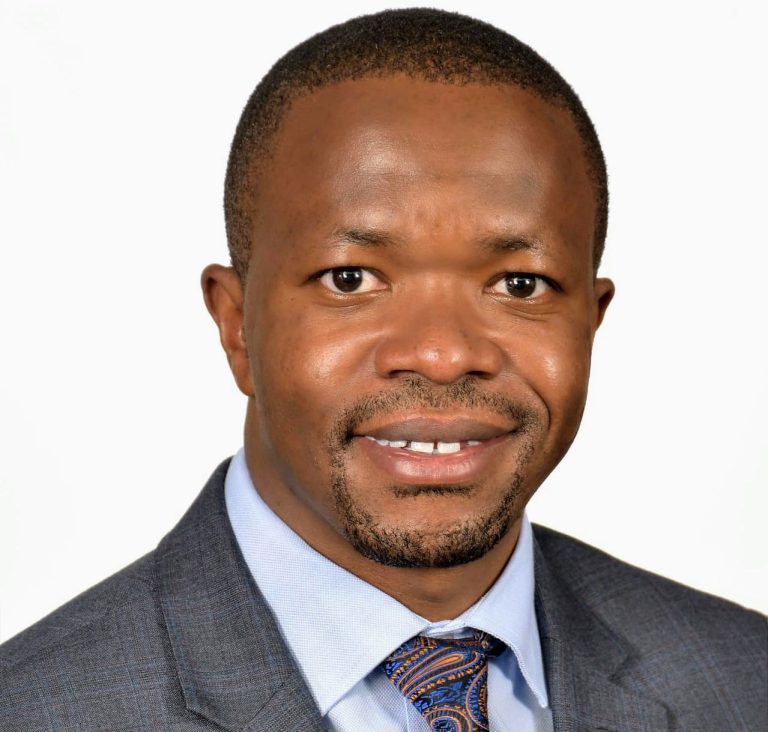
By Eric Gumbo, Managing Partner, G&A Africa LLP
Power stations are commissioned in front of cameras. A listing is marked with the ringing of a bell. The law that made each possible never makes the photograph: the statute that allowed it, the license that permitted it, the contract that financed it and the court that will enforce it all take a back banner. Yet the law is an invisible pivot of economic development. It is where risk is allocated, returns are made predictable and contracts become enforceable. When it is strong, capital flows and investment becomes bankable. When it is weak, even the most promising projects become expensive lessons in risk and lost opportunity.
Africa’s next rise will not be decided at the ribbon-cutting. It will be decided at the drafting table, where negotiation, contracting and legal innovation meet. This does not diminish other factors such as capital volatility, sovereign risk, macroeconomic conditions and the depth of financial markets; the law is in fact a facilitator for most if not all of them. That is where lawyers come in, particularly those well versed in the domestic and international law relevant to the assignment at hand.
The distinction matters more now than a decade ago. The last time the world declared Africa to be rising, the story was told through commodity prices and growth rates, and it faded when prices fell. Growth has returned: the IMF estimates that sub-Saharan Africa grew 4.5% in 2025, its fastest pace in more than a decade. Whether it endures depends on the strength of the institutions behind it, the law foremost among them. Africa is dismantling the obstacles that stalled its last rise, much of it through legal reform: countries are domesticating laws to benefit from African Continental Free Trade Area (AfCFTA) protocols, opening a common market of more than 1.3 billion people.
The first is unpredictable policy, and its cost can be measured. Modelling by the Clean Air Task Force puts the average cost of capital for African power projects at 15.6%, against 5.1% in the United States, 4.2% in Western Europe, 6.6% in China and 2.4% in Japan. For the same money, an African project pays roughly three times what an American one does. Part of that gap is risk investors cannot see through, so they price it in. Clear, stable rules let them see through it, and applying those rules well is largely quiet work for the law.
Many African countries have responded: easing the cost of doing business, improving procurement certainty and funding projects at home through national infrastructure and wealth funds, as seen in Ghana, Nigeria, Egypt, Mauritius and Kenya. The private sector is innovating too: the Dangote refinery’s IPO was listed on the Nigerian exchange and, for the first time in Africa, inward Global Depositary Receipts (GDRs) were issued in Kenya for the East African placement.
The second is fragmentation. Fifty-four national markets, each with its own rules, are individually too small to justify the largest investments. All 54 countries have signed the AfCFTA and, since Somalia deposited its instrument on 4 September 2026, fifty have ratified it. The continent holds about 60% of the world’s uncultivated arable land, yet intra-African trade is only about 16% of its total trade.
The money exists. The Africa Finance Corporation says African institutional investors, including pension funds, insurers, sovereign wealth funds and public development banks, hold at least $1.17 trillion, much of it in government paper and short-term, low-yield assets. The task is no longer to find the money but to build legal structures that make it safe, and reasonably liquid, to invest at home. That is largely a job for the law.
The third is skewed project structuring. A lender’s first questions seldom concern the size of the market. They concern what happens when things go wrong: who bears the currency risk, who arbitrates, how long it takes and whether the money can leave the country afterwards. Clear answers lower the cost of capital; vague ones raise it, and the bill lands on consumers through higher tariffs and on governments through dearer debt. These answers are settled long before the signing ceremony and shape a balance sheet for decades. Again the law is at the centre, from due diligence and disclosures to the information memorandum.
Law, in other words, is not an accessory to development. It is the operating system. Where it is clear, trust grows, and where trust grows, capital flows. The central question remains: are African law firms rising to the occasion, or have they, as the saying goes, remained flower girls at their own wedding?
This asks something of my own profession. Landmark transactions on the continent have often gone to international counsel, and African firms should ask why they are not more often at the centre of the deal. Honest answers mean building capacity, subject expertise, cross-border capital and digital fluency, and the discipline to give clients certainty. Courts and arbitrators carry the same duty: they settle the law and send the signal markets read when pricing risk.
G&A Advocates LLP opened its doors in 2006 in Eldoret, a town better known for its distance runners than its lawyers. This week we become G&A Africa LLP, to be present where capital is being discussed and institutions are being modelled. I share this transition as a challenge to law firms and lawyers to reinvent themselves and play a part in Africa’s re-emergence. We must equip current and future lawyers with fluency in dispute resolution, capital markets, climate and digital finance, and energy and infrastructure, and with a pragmatic role in shaping our continent’s policies and legal frameworks. That goes beyond seeking to stop legislation in court, often for want of what has become a common ground “public participation”, a common area of practice for many Kenyan lawyers. Question the law, yes, but to improve it rather than stifle it. If this trend grows unmitigated, the price will eventually show in reduced jobs and huge lost opportunities for the country and continent, lawyers included.
Above all, it depends on people. The lawyers, regulators, influencers and judges who will do this work must invest in skills and a global understanding of how the economic ecosystem operates including the cost of ‘noise’ on capital. These will be lessons for our benefit and that of posterity.
Africa’s last rise was announced before its foundations were laid. This time we are building from the foundations up: writing our own rules, structuring our own deals and hearing our own disputes at home, with people who will have to live with the results. It is slow work, and almost none of it will ever be photographed. It must be done all the same.
Eric Gumbo is the Managing Partner of G&A Africa LLP, a full-service law firm with two decades of experience advising the investors, businesses and institutions shaping Africa’s economy.