 Digitnomics
A Nigerian-developed artificial intelligence (AI) technology is targeting one of the major bottlenecks in medical imaging, with the potential to cut Magnetic Resonance Imaging (MRI) scan time by up to 90 per cent without requiring new scanning hardware.
The technology, GenScanAI, developed by Mary-Brenda Akoda, winner of the 2026 Nigeria Prize for Science and Innovation, uses artificial intelligence and advanced computing techniques to accelerate MRI image reconstruction while maintaining or improving image quality.
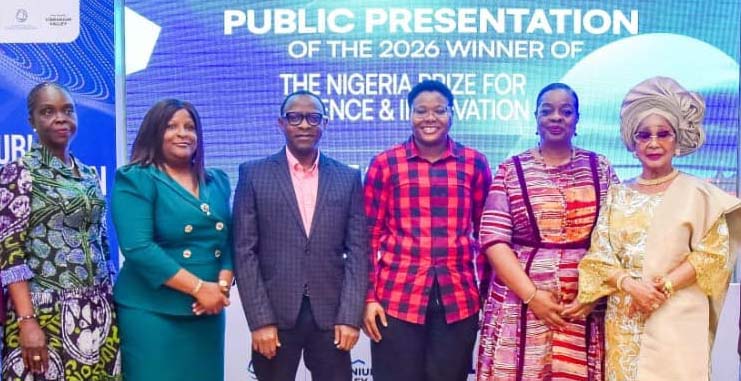
The innovation was unveiled to healthcare professionals, researchers, academics and technology stakeholders at Vibranium Valley, Ikeja, Lagos, highlighting the growing application of AI to healthcare delivery and the potential of locally developed technologies to address operational inefficiencies.
If clinically validated and adopted by hospitals and diagnostic centres, GenScanAI could help healthcare providers increase patient throughput, improve the utilisation of existing MRI equipment and reduce delays associated with medical imaging.
MRI examinations are essential for diagnosing several medical conditions, but the time required to complete scans can constrain the number of patients facilities attend to, particularly where equipment capacity is limited and demand is high.
By reducing the time required for MRI scans, GenScanAI could enable diagnostic centres to examine more patients within existing operating hours. This could improve equipment utilisation and potentially reduce the pressure to expand capacity through immediate investments in additional machines.
The technology also has the potential to accommodate patient movement during scanning, which could support improved image quality. However, its actual performance and clinical benefits will depend on appropriate testing, validation and integration into medical imaging workflows.
Speaking at the unveiling, Sophia Horsfall, General Manager, External Relations and Sustainable Development at Nigeria LNG Limited (NLNG), said the innovation addressed an important healthcare need as population growth continued to place increasing demands on diagnostic services.
“Medical imaging plays a critical role in diagnosis and treatment, but the time required for MRI examinations can create delays for patients and limit the number of people healthcare facilities can serve,” Horsfall said.
She added that advances in artificial intelligence and computing could help address practical healthcare challenges while improving the efficiency of existing infrastructure.
According to Horsfall, the public presentation was intended to connect the winning innovation with medical practitioners, researchers and students, creating opportunities for stakeholders to understand its capabilities and explore potential applications.
For healthcare operators, the commercial significance of technologies such as GenScanAI lies in their potential to improve productivity without immediately increasing capital expenditure. Where the technology delivers its projected performance, facilities could potentially serve more patients using their existing MRI infrastructure.
For patients, shorter scan times could mean less time undergoing examinations and potentially improved access to diagnostic appointments. However, any reduction in waiting times or costs would depend on how healthcare providers implement the technology and whether operational savings translate into better patient access.
Akoda emerged winner of the 2026 Nigeria Prize for Science and Innovation following the evaluation of more than 230 entries. The competition focused on “Innovations in Artificial Intelligence or ICT or Digital Technologies for Development.”
NLNG facilitated the public presentation to promote engagement with the winning innovation and encourage discussions around its potential applications.
The next critical step for GenScanAI is translating its demonstrated potential into a clinically validated solution that healthcare providers can deploy reliably. Its long-term impact will depend on clinical evidence, compatibility with existing imaging systems, regulatory requirements and the willingness of hospitals and diagnostic centres to adopt it.
For Nigeria’s growing health technology ecosystem, the innovation highlights an opportunity to apply artificial intelligence not only to develop new products but also to improve the productivity of expensive medical infrastructure already in place.