
Food Inflation: CADEF Trains 125 Nigerians In Backyard Farming To Ease Household Food Costs
 Digitnomics
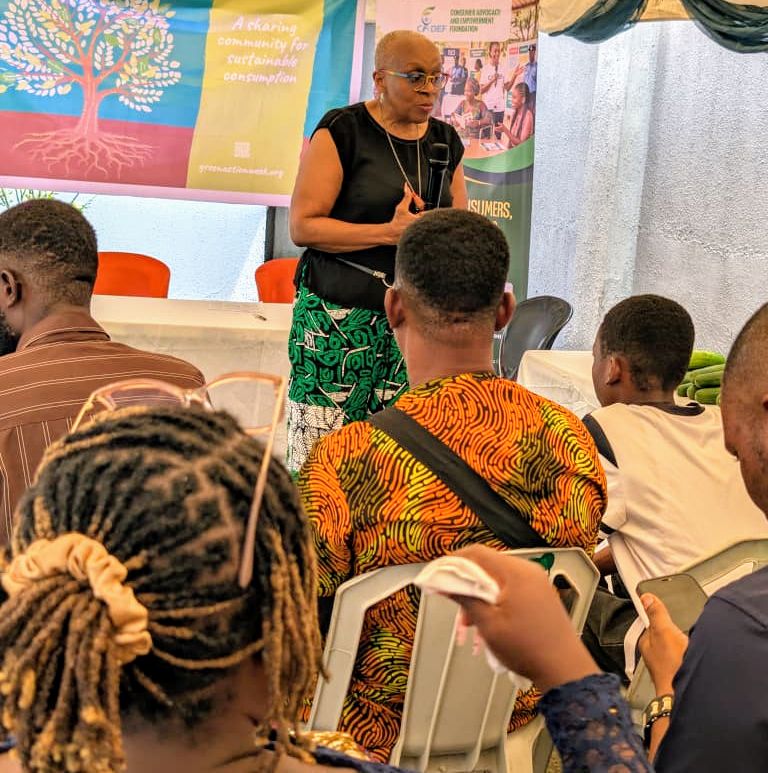
As food affordability remains a major concern for Nigerian households, the Consumer Advocacy and Empowerment Foundation (CADEF) has reached 125 people through a community-based initiative promoting backyard farming and small-space food production.
The initiative, known as the Green Living Initiative (GLI), equipped participants with practical skills to grow food crops at home using inexpensive, readily available and reusable materials, including sacks, plastic containers, empty cooking oil kegs and discarded paint buckets.
The project was supported by the Green Action Fund, funded by the Swedish Society for Nature Conservation (SSNC), and coordinated and administered by Consumers International. It was implemented under the 2026 Green Action Week theme, “Sharing Community.”
The intervention highlights the potential of household food production as a supplementary strategy for managing food expenses, particularly for urban households with limited access to farmland.
According to the National Bureau of Statistics (NBS), food inflation stood at 19.59 per cent year-on-year in September 2026, underscoring the continued pressure of food prices on household purchasing power.
While backyard farming cannot independently resolve Nigeria’s food affordability challenges, initiatives such as CADEF’s demonstrate how households can make productive use of limited spaces to supplement their food supplies and reduce dependence on market purchases for some produce.
How CADEF Extended The Initiative To 125 People
A major feature of the Green Living Initiative was its train-the-trainer model, which was designed to extend the programme’s impact beyond its initial beneficiaries.
CADEF initially trained 25 participants and equipped them with the knowledge and practical skills required to train at least three other people within their communities.
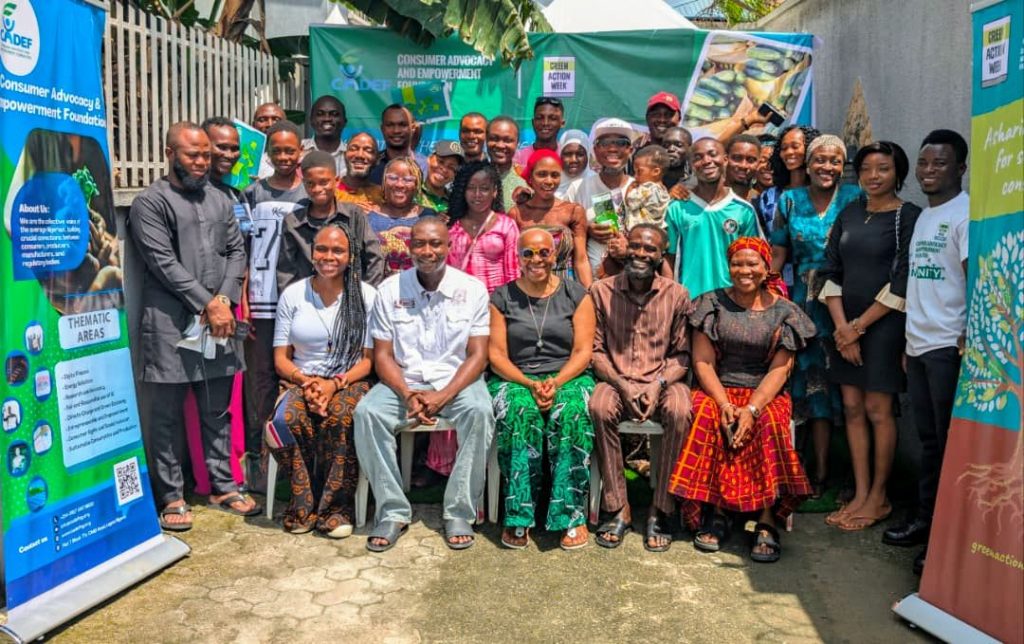
Through this community knowledge-sharing approach, the initiative reached a total of 125 people, with some participants extending the training to additional beneficiaries.
At the project’s closing ceremony in Lagos, participants and Green Living Ambassadors showcased crops cultivated during the programme and demonstrated different methods of producing food in limited spaces.
The gardening techniques included sack farming, container gardening and the use of window boxes and other underutilised household spaces.
Crops grown included okra, cucumber, sweet potato, tomato and groundnut.
CADEF: Backyard Farming Can Support Household Food Security
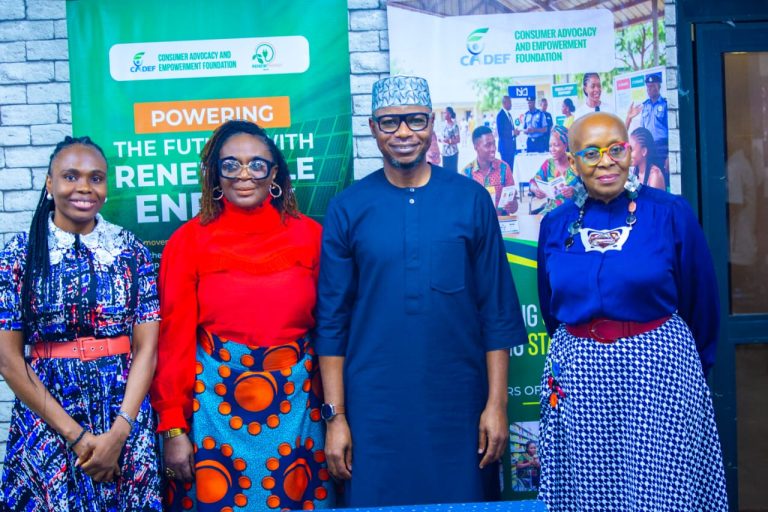
Speaking at the closing ceremony, CADEF’s Executive Director, Prof. Chiso Ndukwe-Okafor, said the initiative was designed to equip households with practical solutions that could be adapted to their available spaces and resources.
She acknowledged that small-space gardening was not a complete solution to food inflation but said it could provide families with another option for accessing some of their food needs.
“Food prices affect what families can afford to put on their tables. We recognise that small-space gardening cannot, on its own, solve the problem of food inflation, but it can give households another option.
“If someone can use a sack, an old bucket or a small space at home to grow vegetables, that is valuable knowledge. The next step is to put that knowledge to use and share it with others,” she said.
Ndukwe-Okafor highlighted the economic potential of household food production, citing the experience of a young man who had adopted sack farming to grow yam for personal consumption and generate additional income.
According to her, the individual cultivates yam in approximately 100 sacks within his compound, sells part of his harvest and uses the proceeds to pay his children’s school fees.
She encouraged participants to sustain their gardening activities beyond the programme and continue transferring their knowledge to other members of their communities.
Lagos Government Endorses Sustainable Food Production
The Deputy Director of Agriculture at the Lagos State Ministry of Agriculture and Food Systems, Ms Olufunke Obafemi, commended CADEF for its consumer education and advocacy efforts.
She emphasised that sustainable agricultural practices, reduced food loss and waste, and responsible consumption were important to strengthening food systems, protecting livelihoods and improving food security.
Obafemi also reaffirmed the ministry’s commitment to supporting initiatives that connect environmental sustainability with agricultural development and public well-being.
Participants Highlight Benefits Of Home Gardening
Participants at the programme also shared how the training had changed their understanding of food production and encouraged them to explore gardening within their homes.
One of the participants, Chibueze Nwachukwu, said the initiative had given him the confidence to begin cultivating food crops for personal consumption.
He explained that before the training, he lacked the knowledge and confidence to grow food at home but had since successfully cultivated groundnuts and planned to experiment with other crops.
“This initiative has made me realise that I can grow some of my basic food right in my backyard, in my own comfort space. Three months ago, I wasn’t confident or knowledgeable about growing my own food.
“With the support from CADEF and the facilitators, I have now been able to grow groundnuts, and I plan to try other crops soon,” he said.
Although the formal programme has ended, CADEF expects participants to sustain their gardening activities and continue sharing their knowledge with others.
The initiative also reinforces the role of consumer education and sustainable consumption in helping households explore practical ways to manage limited resources amid rising living costs.
About CADEF
The Consumer Advocacy and Empowerment Foundation (CADEF) is a Nigerian non-profit organisation focused on consumer protection, education and empowerment. Through research, advocacy, public education and policy engagement, it promotes consumer rights, public health, safety, accountability and sustainable consumption.
 Chinenye Anuforo