$100,000 Science Prize: NLNG Raises Bar for AI Innovation as Entries Hit Record High
 Digitnomics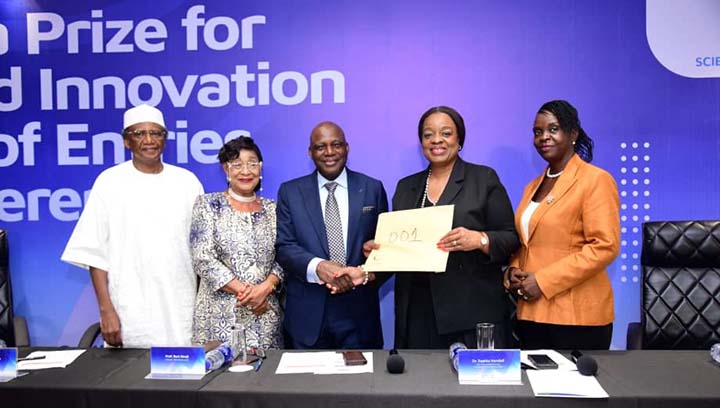
Nigeria LNG Limited (NLNG) has recorded the highest participation level in the history of The Nigeria Prize for Science and Innovation, as the 2026 edition attracted 237 entries focused on artificial intelligence and digital technologies.
The figure represents the largest number of submissions since the $100,000 prize was established in 2004 and comes months after the 2025 edition ended without a winner following a strict evaluation process.
AI and Digital Innovation Gain Momentum
The entries were formally handed over to the Prize’s Advisory Board in Lagos, officially commencing adjudication for this year’s competition themed: “Innovations in ICT, Artificial Intelligence (AI), and Digital Technologies for Development.”
The decision to retain the AI-focused theme for a second consecutive year reflects growing attention on digital technologies as drivers of economic development, productivity, and problem-solving across sectors.
Industry analysts say the sharp increase in participation signals expanding interest in Nigeria’s emerging AI and innovation ecosystem despite broader funding and infrastructure challenges.
2025 No-Winner Decision Raises Competition Standards
The record participation follows the controversial outcome of the 2025 edition, where none of the 112 submitted entries met the Prize’s benchmark for:
Scientific excellence
Originality
Scalability
Real-world impact
NLNG said the decision was necessary to preserve the credibility and international standing of the Prize.
Speaking during the handover ceremony, General Manager, External Relations and Sustainable Development, Sophia Horsfall, said maintaining rigorous standards remains essential if Nigerian innovations are to achieve global relevance.
According to her, the company responded to last year’s outcome not by lowering standards, but by intensifying engagement with researchers, innovation hubs, and academic institutions across the country.
Digital Infrastructure Seen as Economic Foundation
Horsfall described digital infrastructure as increasingly central to Nigeria’s economic future, arguing that long-term sustainability would depend on the country’s ability to transform research into scalable innovation.
She noted that the rise from 112 submissions in 2025 to 237 entries in 2026 reflects growing momentum within Nigeria’s science and technology ecosystem.
Analysts say the trend mirrors broader global interest in AI-driven innovation as countries compete to build digital capacity and technology-based economic growth.
Focus on Scalable, Real-World Solutions
Chairman of the Advisory Board, Barth Nnaji, said entries would undergo strict technical and intellectual scrutiny focused on measurable socio-economic impact.
According to him, the competition is seeking practical solutions capable of addressing real-world development challenges through technology.
Areas highlighted include:
Digital healthcare solutions
AI-powered education systems
Language and cultural preservation technologies
Community-focused digital infrastructure
Nnaji said the 2025 no-winner verdict reinforced the Prize’s reputation for excellence rather than weakened it.
Innovation Ecosystem Shows Resilience
NLNG’s Manager, Corporate Communication and Public Affairs, Anne-Marie Palmer-Ikuku, said the increased participation demonstrated resilience within Nigeria’s innovation community despite last year’s disappointing outcome.
The Advisory Board also includes:
Nike Akande
Baba Yusuf Abubakar
The winning entry for the 2026 edition is expected to be announced in September.
Digitnomics Insight
The surge in submissions reflects growing momentum around AI and digital innovation in Nigeria, even as standards for scientific and commercial viability become more demanding. As global competition around artificial intelligence intensifies, platforms that reward scalable, locally relevant innovation could play a critical role in shaping Nigeria’s digital economy trajectory.