From SIM cards to AI: What MTN’s 25 years says about Nigeria’s digital future
 Digitnomics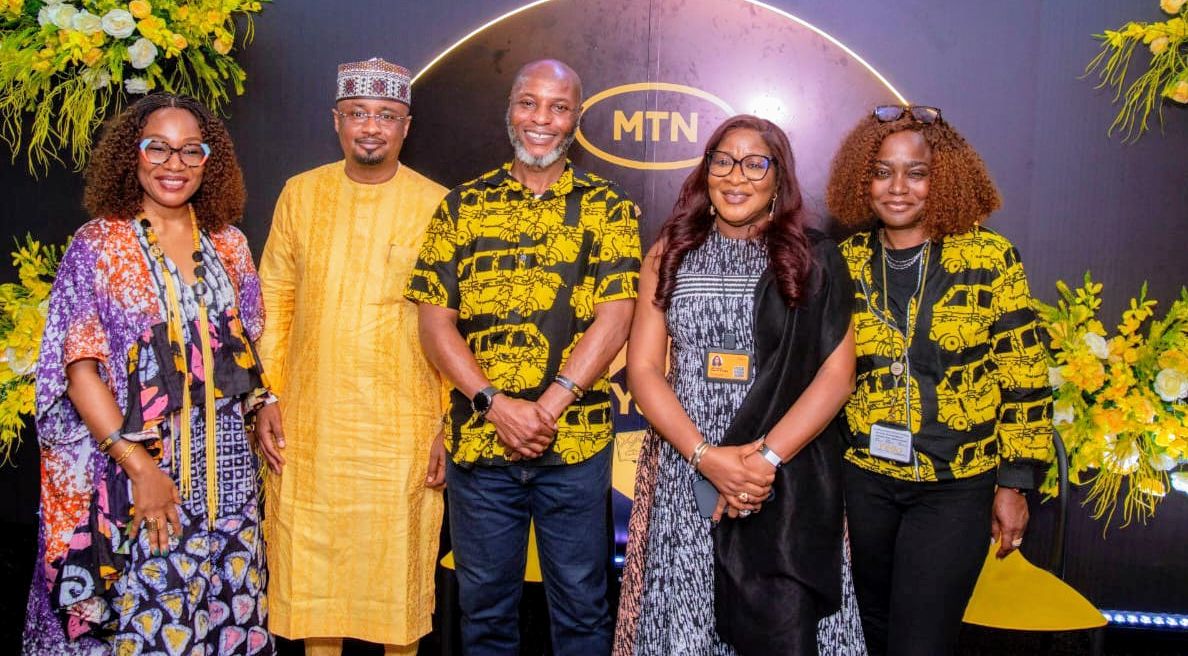
By Francisca Anuforo
Twenty-five years ago, the arrival of MTN in Nigeria was largely about one thing: giving Nigerians a mobile phone connection.
Today, that connection has become the gateway to banking, commerce, entertainment, remote work, social media, digital businesses and an expanding universe of online services.
That transformation is now forcing MTN Nigeria to rethink what it means to be a telecommunications company.
As the operator marks 25 years in Nigeria, it is preparing for a future in which the biggest opportunities may no longer come from voice calls, but from the digital activity taking place on its network.
MTN now has about 96 million customers and has invested approximately N1.6 trillion in capital expenditure over the past 18 months, according to its Chief Financial Officer, Modupe Kadri.
The company also paid more than N620 billion in taxes and other payments during the period.
The investment reflects a simple reality about Nigeria’s digital economy: as more people and businesses move online, the infrastructure required to keep them connected becomes increasingly expensive and strategically important.
But infrastructure is only one part of MTN’s next chapter.
The bigger question is what the company can build around the connectivity it has spent 25 years creating.
When MTN entered Nigeria, the mobile phone was primarily a communication device.
Today, the smartphone is a bank branch, marketplace, office, entertainment centre, classroom and business tool.
That evolution has fundamentally changed the value of a telecommunications network.
MTN’s next opportunity is therefore not simply to connect more people, but to participate in more of the activities that take place once they are connected.
This explains the company’s growing interest in fintech, artificial intelligence, digital platforms, entertainment, cloud and data services.
Kadri said the company had consistently been at the forefront of technological development in Nigeria.
“The good thing is that MTN has brought that technology to Nigerians. Over the past 25 years, MTN has been leading the way,” he said.
The statement captures the broader evolution of Nigeria’s digital economy.
The first wave of mobile adoption was about access.
The next wave is about usage.
And the emerging phase is increasingly about intelligence, platforms and digital transactions.
Fintech is one of the clearest examples.
MTN already has access to a huge customer base and a nationwide distribution network. As financial services become increasingly digital, that reach can become an important advantage.
Kadri said customers could expect greater use of artificial intelligence and other technologies in MTN’s fintech offerings.
“What our customers can look forward to in the FinTech space is greater use of artificial intelligence and other technologies to deliver more benefits to customers,” he said.
This signals a broader shift in the company’s business model.
Instead of earning primarily when customers make calls, send messages or buy data, the opportunity is to remain part of a customer’s digital journey across multiple services.
That could include payments, financial services, entertainment, content and other digital experiences.
AI could make that ecosystem even more valuable.
MTN is exploring the use of artificial intelligence to understand customer behaviour, improve segmentation and targeting and make its operations more efficient.
For a company operating a network used by tens of millions of people, the amount of data generated by customers can become a major operational resource.
AI can help the operator understand where demand is growing, what services customers need and how network resources can be deployed more efficiently.
But there is an important catch.
None of these ambitions can work without connectivity.
That is why the N1.6 trillion invested in capital expenditure over the past 18 months is significant.
The investment is not simply about keeping phones connected. It is about creating the infrastructure required for Nigeria’s increasingly data-driven economy.
A customer watching a video, running an online business, making a digital payment or using an AI application is consuming network resources.
As those activities multiply across millions of users, network capacity becomes a critical part of the digital economy.
This makes Nigeria’s infrastructure plans particularly important.
The Federal Government’s proposed 90,000-kilometre fibre-optic network could provide a significant boost to connectivity and create a wider foundation for the country’s digital ambitions.
Fibre is not merely about faster internet.
It supports the infrastructure behind cloud computing, data centres, enterprise networks, AI applications and many of the services expected to drive the next phase of digital growth.
For MTN and other operators, a broader fibre network could also make it easier to extend high-speed connectivity beyond Nigeria’s largest cities.
There is, however, another problem that infrastructure alone cannot solve.
Millions of Nigerians still struggle to afford smartphones capable of taking full advantage of modern networks.
As applications become more sophisticated, the gap between having network coverage and actually being able to participate in the digital economy could become more significant.
MTN is therefore working with device manufacturers and original equipment manufacturers to improve access to smartphones while avoiding the risks associated with holding large inventories in a market where technology changes quickly.
The company’s digital ambitions also stretch into entertainment.
According to A’isha Mumuni, Chief Digital Officer of MTN Nigeria, the company’s Next Afrobeats Star platform is moving into its second season, alongside other family-friendly and educational content initiatives.
This is another indication of how the definition of a telecoms company is changing.
The network is becoming the platform through which consumers access multiple aspects of their digital lives.
MTN does not necessarily need to own every service.
Its advantage could be the infrastructure, customer base and distribution network that allow other digital services to reach millions of Nigerians.
That is where the real significance of MTN’s next 25 years lies.
The company is no longer operating in a market where the biggest question is whether Nigerians can make a mobile call.
The bigger questions now are whether they can afford a smartphone, access reliable broadband, make digital payments, run businesses online, consume digital content and use emerging technologies such as AI.
MTN’s challenge is to remain relevant across all those activities.
Ugonwa Nwoye, Chief Customer Relations and Experience Officer of MTN Nigeria, said the company would continue to focus on technology and customer experience.
“Our job as MTN is to always be at the forefront of technology, to ensure that we are able at any point in time to provide our customers with the right levels of experience and stay true to our commitment to make their lives better,” Nwoye said.
The company’s 25-year journey therefore offers a useful window into Nigeria’s own digital transformation.
In 2001, the big revolution was putting a mobile phone in the hands of Nigerians.
In 2026, the revolution is about what those phones can do.
The next phase could be even bigger.
As connectivity becomes more deeply integrated into financial services, commerce, entertainment, artificial intelligence and everyday life, the value of a telecommunications network will increasingly depend on the ecosystem built around it.
For MTN, the first 25 years were about connecting Nigerians.
The next 25 may determine how much of Nigeria’s digital economy it can help power.