
Atiku Raises Data Privacy Concerns After Unauthorised Credit Into Private Account
 Digitnomics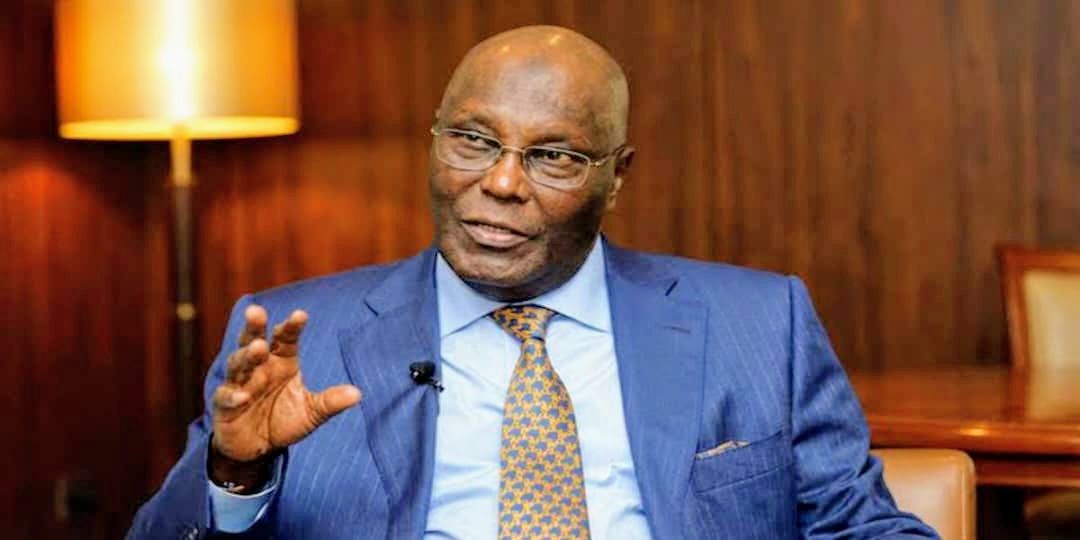
Former Vice President and African Democratic Congress (ADC) presidential candidate, Atiku Abubakar, has raised concerns over the security of his private banking information following an unsolicited credit into one of his personal bank accounts.
The development has sparked questions about the protection of customers’ confidential financial information and how private banking details could potentially come into the possession of unknown individuals.
According to a statement issued by Atiku’s Senior Special Assistant on Public Communication, Phrank Shaibu, an unidentified individual transferred money into one of the former vice president’s private accounts.
The transaction reportedly carried the narration, “Contribution Electioneering Campaign.”
Shaibu said neither Atiku nor his campaign team solicited, authorised or had prior knowledge of the payment or the individual behind it.
The statement also stressed that the account involved is strictly private and that its details are not publicly available.
This, according to Atiku’s camp, raises questions about how the sender obtained the confidential banking information.
How secure is private financial information?
The incident has raised a broader concern around financial data privacy in Nigeria, particularly as banking and financial services increasingly depend on digital systems.
Banks and fintech companies hold vast amounts of sensitive customer information, including account details, phone numbers, identification records and transaction histories.
Unauthorised access to such information can expose individuals to risks including fraud, targeted scams, identity theft and other forms of financial crime.
Atiku’s camp warned that if the private banking information of a former vice president and presidential candidate could allegedly be accessed and used by an unknown party, it raises concerns about the protection of financial information belonging to ordinary Nigerians.
However, there is currently no public evidence establishing that a specific bank or financial institution suffered a data breach in connection with the transaction.
The allegation has instead raised questions that would require investigation to establish how the sender obtained the account details.
Security agencies put on notice
Atiku’s camp said relevant security agencies had been alerted about the incident.
The development comes as political activities ahead of Nigeria’s 2027 general elections intensify.
His spokesperson also described the incident as part of what the camp considers a series of suspicious activities surrounding the former vice president.
The campaign has not publicly identified the bank involved, the sender of the funds or the amount transferred.
Why the incident matters
Beyond the political dimension, the case highlights an important issue for Nigeria’s increasingly digital financial ecosystem: the protection of personal financial data.
As more Nigerians use mobile banking, fintech applications and digital payment platforms, financial information is increasingly stored and processed electronically.
This makes strong cybersecurity controls, responsible handling of customer information and effective monitoring of unauthorised access increasingly important.
For customers, the incident is also a reminder to pay attention to unexpected transactions and immediately report suspicious activity to their financial institutions.
For financial institutions, it reinforces the importance of ensuring that access to customer information is tightly controlled and that unusual transactions are properly monitored.
Atiku’s claim of a possible compromise remains an allegation pending investigation.
The key question now is not only who sent the money, but how the sender obtained the details of a private bank account in the first place.

 Chinenye Anuforo