
 Digitnomics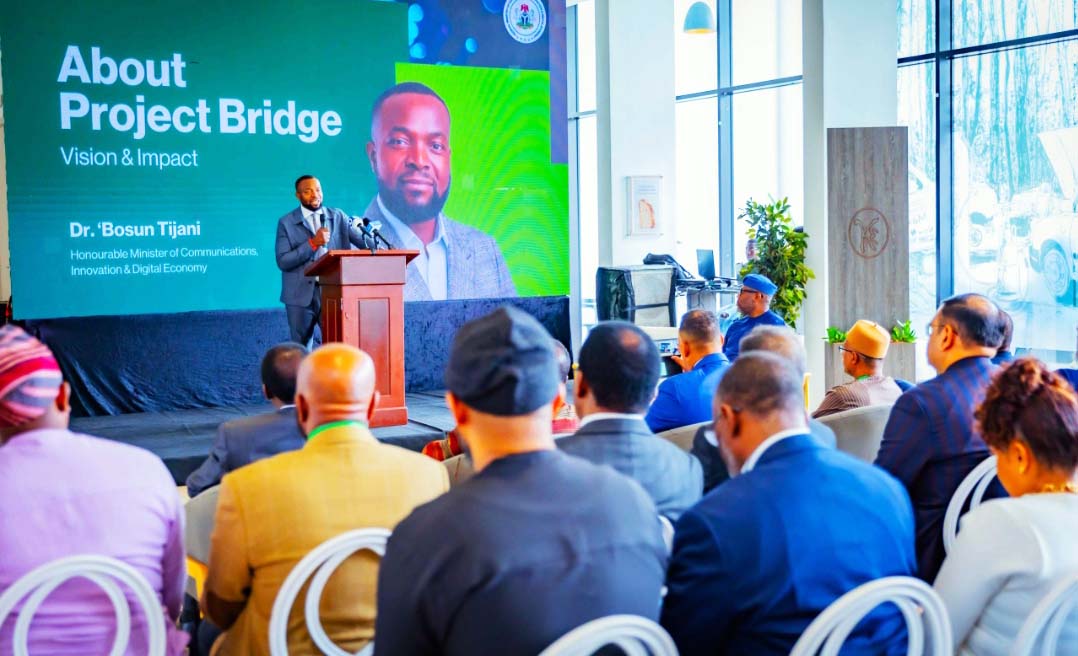
The Federal Government has announced that implementation of Project Bridge, its planned 90,000-kilometre nationwide fibre-optic network, will commence in October 2026.
The Minister of Communications, Innovation and Digital Economy, Bosun Tijani, disclosed this in Abuja on Thursday during the National Innovation Hub Standards Framework Workshop.
According to the minister, the Federal Government has secured funding to commence the rollout, which is aimed at expanding broadband connectivity and strengthening the digital infrastructure required to support Nigeria’s digital economy.
“President Bola Tinubu approved that we must deepen connectivity and we’re investing in 90,000 kilometres of fibre optic network,” Tijani said.
Project expected to expand broadband access
Project Bridge is expected to significantly expand Nigeria’s fibre-optic infrastructure, with particular attention to underserved and rural communities.
The government says the project is part of broader efforts to provide the foundational infrastructure needed to support technology-driven sectors including agriculture, healthcare, education, financial services and commerce.
The full deployment is projected to require about $2 billion.
So far, the project has attracted more than $900 million in financing commitments from international development partners, including the World Bank Group, African Development Bank and European Bank for Reconstruction and Development (EBRD).
Tijani said that when completed, the network would rank among the longest fibre-optic networks in Africa, comparable in scale to infrastructure in countries such as South Africa and Egypt.
Project Bridge part of wider digital infrastructure push
The fibre rollout is one of several digital infrastructure projects the Federal Government expects to advance from October.
Another is the nationwide digital postcode project, which is designed to provide buildings across Nigeria with unique alphanumeric codes. The system is expected to improve location identification and support the delivery of goods, services and digital platforms.
The government is also planning the deployment of 3,700 telecom towers in rural communities.
The rural tower project is expected to extend mobile network coverage to underserved communities and bring millions of Nigerians into the digital economy.
Why the fibre rollout matters
Nigeria’s growing dependence on digital services has increased the need for reliable and widespread broadband infrastructure.
For businesses, improved fibre connectivity could support cloud computing, digital payments, e-commerce, remote work and other technology-enabled services.
For individuals, wider broadband coverage could improve access to online education, digital financial services, healthcare platforms and employment opportunities.
However, the impact of Project Bridge will ultimately depend not only on the length of fibre deployed but also on whether the infrastructure translates into faster, more reliable and more affordable internet access for Nigerians.
With implementation scheduled to begin in October, attention will now shift to how quickly the Federal Government can move from funding and planning to actual deployment across the country.