Innovation, infrastructure, not penalties key to bridging Nigeria’s digital divide – Experts
 Digitnomics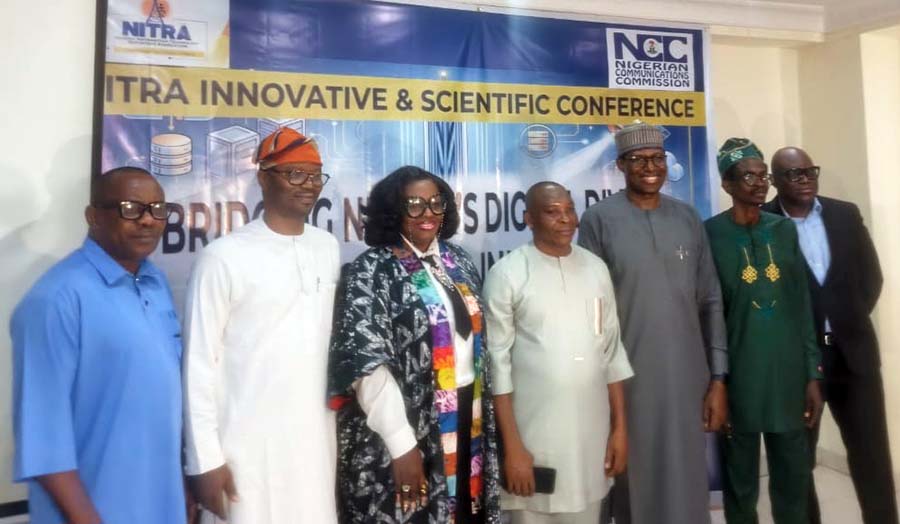
Nigeria’s quest for universal digital access will remain elusive unless the country prioritises scientific innovation, broadband infrastructure, cybersecurity and enabling policies over punitive regulatory measures, industry leaders have said.
The consensus emerged at the 2026 Nigeria Information Technology Reporters Association (NITRA) Innovative and Scientific Conference held in Lagos with the theme, “Bridging Nigeria’s Digital Divide with Scientific Innovation.”
The conference convened leaders from the telecommunications, fintech, cybersecurity and technology ecosystems to examine practical solutions for expanding digital inclusion and unlocking Nigeria’s digital economy.
Speaking during a panel session, Chairman of the Association of Licensed Telecommunications Companies of Nigeria (ALTON), Engr. Gbenga Adebayo, argued that imposing fines on telecom operators would not solve the country’s persistent quality of service challenges.
According to him, operators are constrained by infrastructure deficits, multiple taxation, Right of Way (RoW) bottlenecks, fibre cuts, vandalism and other systemic challenges beyond their control.
“Fines and penalties do not remove the fundamental causes of poor quality of service. Telecom operators operate within the same socio-economic environment as every other sector of the economy. Until issues such as delays in obtaining Right of Way approvals, infrastructure vandalism and fibre cuts are addressed, penalties alone cannot improve service delivery,” Adebayo said.
He noted that frequent fibre cuts and lengthy approval processes for fibre deployment continue to slow broadband expansion across the country.
Adebayo stressed that Nigeria cannot achieve truly affordable, reliable and high-speed broadband without widespread fibre infrastructure.
“If Nigeria is serious about digital transformation, Right of Way should be free. We need fibre connectivity to homes, businesses and communities. The economic benefits of broadband far outweigh the revenue generated from charging operators for Right of Way,” he added.
Also speaking, Chief Financial Officer and Head of Operations, Quomodo Systems Africa, Mrs. Olufunke Tonye-Preghafi, said digital transformation is impossible without resilient infrastructure and strong cybersecurity.
She explained that while conversations around digital inclusion often focus on connectivity, the invisible technologies powering secure digital services are equally important.
“Behind every digital service is a secure network, resilient infrastructure, integrated enterprise systems and robust cybersecurity. Innovation begins with ideas, but those ideas can only thrive on secure and resilient technology platforms,” she said.
Tonye-Preghafi observed that cybersecurity has moved from being an operational concern to a boardroom priority as cyber threats become more sophisticated.
She noted that organisations must invest in technologies such as Vulnerability Assessment and Penetration Testing (VAPT), Security Operations Centres (SOC), Managed Detection and Response (MDR), Identity and Access Management (IAM) and Governance, Risk and Compliance (GRC) to safeguard digital assets.
“The organisations that will lead tomorrow are not those that simply adopt technology first. They are those that innovate securely, govern wisely and build resilience into every stage of their digital transformation journey,” she added.
On the role of financial technology, Divisional Head, Financial Industry Partnership at Remita, Lanre Idowu, said fintech has fundamentally changed how Nigerians access financial services and participate in the digital economy.
He described Nigeria as a country of both momentum and challenges.
According to him, while Nigeria now boasts one of Africa’s fastest-growing fintech ecosystems, globally recognised technology companies and world-class instant payment infrastructure, barriers such as poor broadband penetration, uneven digital infrastructure and the rising cost of internet access continue to exclude millions of Nigerians from the digital economy.
Idowu recalled the era when banking transactions were entirely manual.
“There was a time when banking meant filling paper forms, spending hours in queues and waiting several days for outstation cheques to clear. Today, instant payments, ATMs and digital banking have transformed that experience completely,” he said.
He noted that platforms such as Remita have simplified payments for individuals, businesses and government, helping to deepen financial inclusion across the country.
According to him, Nigeria’s next phase of digital transformation must focus on taking technology beyond urban centres by expanding broadband infrastructure, improving affordability and ensuring that underserved communities benefit from digital innovation.
Participants agreed that achieving meaningful digital inclusion will require stronger collaboration between government, regulators, academia and the private sector, alongside sustained investment in broadband infrastructure, scientific research, cybersecurity, digital literacy and indigenous technology development.
They maintained that while Nigeria has made significant progress in digital transformation, bridging the digital divide will ultimately depend on creating an enabling environment where innovation can thrive and digital opportunities are accessible to every Nigerian.