Meta Drives $820 Million Economic Impact in Nigeria as AI Adoption Gains Momentum
 Digitnomics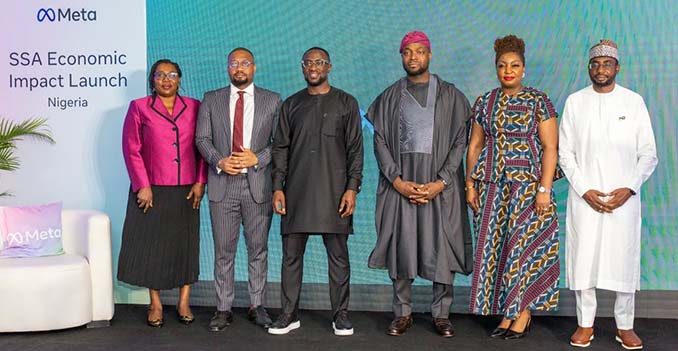
By Nonye Ngoka,
Meta’s digital platforms are contributing an estimated $820 million annually to Nigeria’s economy, with artificial intelligence projected to unlock as much as $22 billion in GDP growth by 2035, according to new independent research examining the country’s digital transformation.
The report, titled Nigeria’s Digital Economy and conducted by research firm Public First, highlights the growing role of social and messaging platforms as critical digital infrastructure supporting entrepreneurship, commerce, and online participation across Nigeria.
Researchers found that Meta’s ecosystem — including Facebook, Instagram, WhatsApp, Messenger, Threads, and Meta AI — is increasingly embedded within Nigeria’s business environment, helping millions of small enterprises reach customers and improve productivity.
Digital Platforms Becoming Economic Infrastructure
According to the study, approximately 14 million Nigerian small and medium-sized enterprises (SMEs) used Meta platforms in 2025 to launch, manage, and expand their businesses.
The report estimates that these activities contributed around $2 billion to Nigeria’s GDP while generating roughly $640 million in productivity gains, largely through instant messaging and digital communication tools.
Industry analysts say the findings reflect how social platforms are evolving beyond communication tools into commercial infrastructure supporting digital trade, customer acquisition, and business operations.
The study suggests that under stronger digital adoption and supportive policy conditions, Meta’s broader economic contribution in Nigeria could rise to $2 billion annually.
WhatsApp Emerging as Nigeria’s AI Gateway
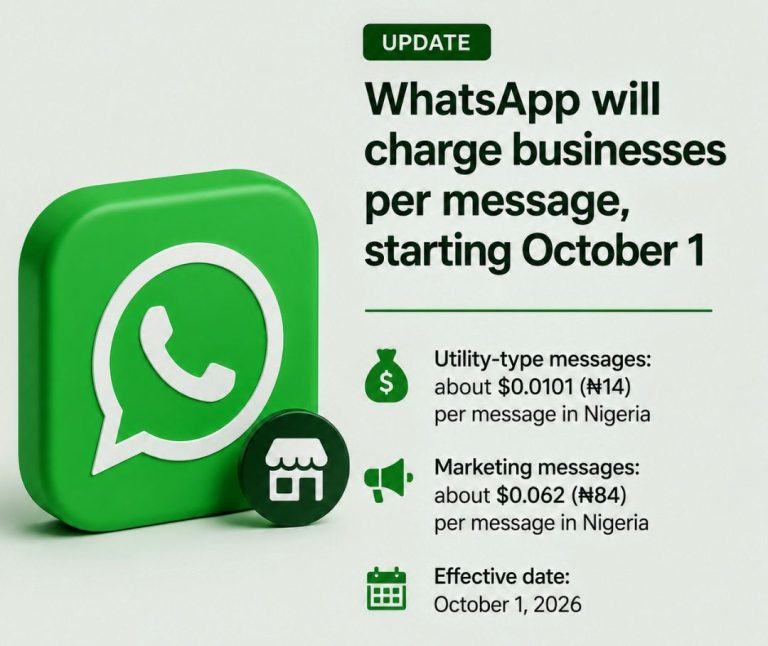
WhatsApp is also becoming an important entry point for artificial intelligence adoption in Nigeria and across Sub-Saharan Africa.
The research found that AI engagement within the region is increasingly taking place through messaging platforms already familiar to users, with WhatsApp accounting for the majority of Meta AI interactions.
Analysts say this pattern highlights a growing shift in AI adoption, where consumers and businesses access intelligent tools through everyday communication channels rather than standalone applications.
For Nigeria’s digital economy, this lowers adoption barriers and accelerates AI integration into commerce, education, and daily productivity.
AI Could Add $22 Billion to Nigeria’s Economy
The report identifies artificial intelligence as one of Nigeria’s next major growth frontiers.
According to the findings:
- AI could contribute approximately $22 billion to Nigeria’s GDP by 2035
- 87% of online Nigerians believe African-developed AI will be important for economic growth
- Open-source AI is creating opportunities for local developers to build solutions in African languages and for local markets
Technology experts say locally relevant AI models could play an increasingly important role in sectors such as agriculture, education, health, financial services, and digital commerce.
SMEs Expanding Beyond Local Markets
For small businesses, digital platforms are becoming critical tools for overcoming traditional geographic limitations.
The study found that 81% of Nigerian online businesses surveyed said Meta’s platforms helped them expand their customer base beyond local communities.
This, analysts say, is reducing customer acquisition costs and allowing businesses in smaller cities and underserved regions to access marketing and commerce tools previously available mainly to larger firms.
Researchers also found that 93% of Nigerian online adults feel more connected to broader communities through Meta’s platforms, reflecting the growing integration of digital platforms into both economic and social life.
Connectivity and Policy Seen as Key Growth Drivers
Meta’s Director of Public Policy for Sub-Saharan Africa, Balkissa Ide Siddo, said the findings demonstrate how digital platforms are helping reduce traditional barriers to business growth and market access.
She noted that continued improvements in internet connectivity, supportive digital policies, and locally relevant AI development will be critical to Nigeria’s next phase of digital expansion.
Public First Director Alison Neyle said the research illustrates how digital platforms are strengthening entrepreneurship and business growth across both formal and informal sectors of the economy.
Analysts say Nigeria’s expanding digital economy now depends increasingly on a combination of:
- Reliable internet access
- Digital skills
- Platform infrastructure
- AI innovation
- Enabling policy frameworks
Digitnomics Insight
Nigeria’s digital economy is increasingly being shaped by platform infrastructure, messaging ecosystems, and AI-enabled services. As businesses migrate online and consumers embrace digital tools, platforms such as WhatsApp, Facebook, and Instagram are evolving into economic infrastructure powering commerce, entrepreneurship, and the next phase of Nigeria’s technology-driven growth.