
Tijani Unveils AI, Robotics Innovation Hub at OAU, Urges Students to Build Solutions for Nigeria
 Digitnomics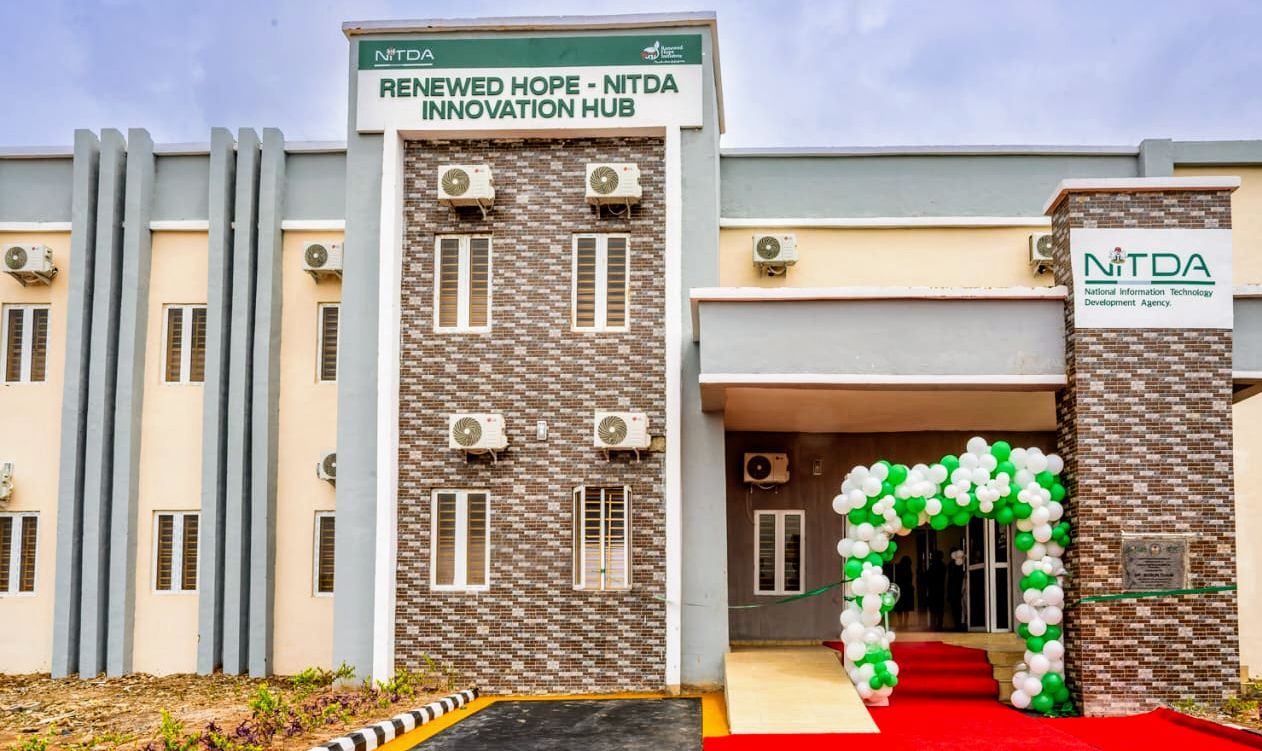
By Nonye Ngoka,
The Minister of Communications, Innovation and Digital Economy, Dr. Bosun Tijani, has challenged Nigerian students to move beyond consuming technology and become active creators of solutions capable of transforming the country’s economy.
Speaking at the commissioning and handover of the Renewed Hope–NITDA Innovation Hub at Obafemi Awolowo University (OAU), Ile-Ife, Tijani described the facility as a strategic investment in Nigeria’s digital future and a platform for nurturing the next generation of innovators.
The hub, established by the National Information Technology Development Agency (NITDA) in partnership with the Renewed Hope Initiative, features advanced laboratories dedicated to Artificial Intelligence (AI), Robotics, Additive Manufacturing and the Internet of Things (IoT).
Addressing students, academics, alumni and stakeholders, the Minister stressed that innovation is ultimately driven by people rather than physical infrastructure.
“Innovation does not come from buildings; innovation comes from people,” Tijani said. “Before all these buildings, this university had been producing talent, innovators and people who have changed our country for good.”
According to him, the facility was designed to bridge the gap between classroom learning and practical innovation by giving students access to cutting-edge technologies and an environment where ideas can be transformed into real-world solutions.
Tijani noted that access to knowledge is no longer a major challenge in the digital era, as information is readily available online. He argued that the real differentiator is the ability to apply knowledge to solve problems and create value.
“A lot of students are in school today at a time when knowledge itself is ubiquitous,” he said. “The biggest challenge today is the ability to apply the knowledge that you have been given or that you find.”
He explained that innovation hubs play a critical role in helping young people experiment, prototype ideas and develop solutions capable of addressing societal challenges while contributing to economic growth.
“If you want to know how to build a helicopter today, you can find it on Generative AI. But the question is, can you translate that knowledge into action? That is what centres like these are meant for,” he added.
The Minister urged students, faculty members and alumni to take ownership of the facility and ensure it remains fully utilised rather than becoming an underused asset.
He further emphasised that Nigeria’s ambition to become a leading digital economy will depend largely on the ability of young people to innovate, build technology-driven solutions and create sustainable value.
“The leaders can try, but if you do not apply your knowledge to build solutions, we will not get to where we need to be,” Tijani stated.
In his remarks, the Vice-Chancellor of Obafemi Awolowo University, Professor A.S. Bamire, commended Tijani and the Director General of NITDA, Kashifu Inuwa, CCIE, for their continued support towards the institution’s digital transformation efforts.
Bamire disclosed that the Minister had supported students through the donation of 50 laptops, a $1,000 innovation support fund and a commitment to provide a 30-kilometre fibre-optic network to improve internet connectivity across the campus.
He also praised NITDA for consistently investing in digital infrastructure and innovation facilities that have strengthened the university’s technology adoption capacity, enhanced digital skills development and expanded opportunities for research and innovation.
According to the Vice-Chancellor, the partnership between OAU and NITDA is helping to prepare students for success in an increasingly technology-driven global economy.
The Renewed Hope–NITDA Innovation Hub is part of broader efforts by NITDA to strengthen Nigeria’s innovation ecosystem, expand digital skills development and provide young Nigerians with access to emerging technologies.
Stakeholders believe the initiative will equip students with practical skills, entrepreneurial capabilities and innovation-driven mindsets required to compete globally and contribute to Nigeria’s digital economy aspirations.

 Chinenye Anuforo