 Digitnomics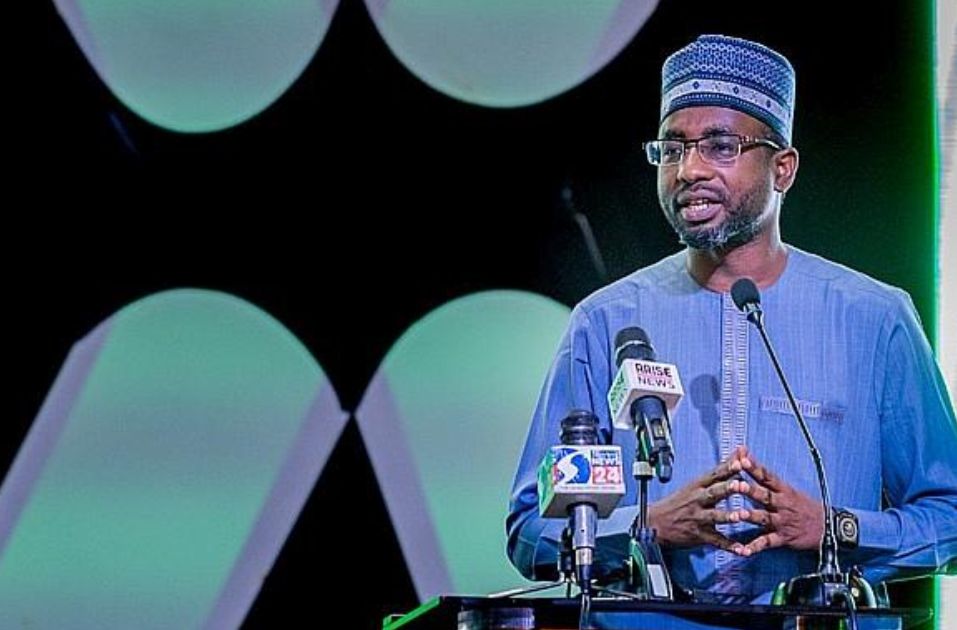
Nigeria’s banking sector is becoming too digital and interconnected for regulators to rely on traditional methods alone.
That was the warning from the Director-General of the National Information Technology Development Agency (NITDA), Kashifu Inuwa, who said the future of financial stability now depends heavily on digital stability.
Speaking at the 15th Retreat of the Central Bank of Nigeria (CBN) Committee of Departmental Directors in Lagos, Inuwa said the evolution of banking from physical branches to internet banking, mobile platforms, fintech and embedded finance had created a much wider ecosystem that regulators must understand and supervise.
His message was simple: you cannot fully regulate modern banking by looking only at the banks.
Today, financial services depend on telecommunications networks, cloud infrastructure, fintech companies, digital platforms, data systems and other technology providers.
A disruption in any of these areas could potentially affect financial services far beyond a single institution.
“To achieve financial stability, we need digital stability. Without digital stability, today we cannot be talking about financial stability in the financial sector,” Inuwa said.
He argued that regulators must move from periodic supervision to real-time monitoring of the wider financial ecosystem.
“We need to be ahead of the institutions we regulate. We cannot wait for regulated institutions to submit returns before we analyse and understand what is happening. We need end-to-end visibility of the ecosystem,” he said.
For Nigeria, this has major implications as more consumers move their financial activities to mobile apps, fintech platforms and other digital channels.
Inuwa also drew a distinction between simply digitising existing processes and undergoing genuine digital transformation.
According to him, digitalisation may improve an existing process, but digital transformation requires institutions to rethink how they operate, create value and respond to changing consumer and technological realities.
He also warned about the risks created by the financial sector’s growing dependence on external technology providers.
Cloud outages, connectivity failures, cyberattacks and disruptions affecting digital platforms can potentially create problems across multiple financial institutions at the same time.
Artificial intelligence is adding another layer to the challenge.
While AI can help banks and regulators detect fraud, monitor transactions and strengthen cybersecurity, Inuwa warned that AI-powered systems are also becoming targets for sophisticated attacks.
This means institutions will have to learn how to use AI to defend their systems while also protecting the AI systems themselves.
Another major issue raised by the NITDA boss was digital sovereignty.
He argued that Nigeria must develop the local infrastructure, skills and capabilities required to maintain meaningful control over critical digital systems supporting the economy.
“Financial stability now depends on resilient technology and Nigeria’s capacity for digital self-determination,” he said.
The conversation comes at a time when Nigeria’s financial ecosystem is increasingly being shaped by technology.
The rise of fintechs, digital banks, mobile payments, cloud services and embedded finance means that the boundaries between banking and technology are becoming increasingly difficult to separate.
For regulators, therefore, the question is no longer simply whether a bank is financially sound.
They must also ask: Is the technology supporting that bank resilient? Who controls the infrastructure? What happens when a critical technology provider goes down? How exposed is the system to cyberattacks? And does Nigeria have the skills and infrastructure to respond when something goes wrong?
The CBN Governor, Olayemi Cardoso, who addressed participants virtually, meanwhile assured staff that the apex bank was in a strong position following its ongoing reforms.
Cardoso said the reforms were intended to strengthen the institution and protect career officers, insisting that institutionalisation should not be viewed as a threat.
“The Bank is in a good place. Our staff have nothing to fear. Reform and institutionalisation are not a threat to the career officer; they are the protection of the career officer,” he said.
The Chairman of the Committee of Departmental Directors, Jimoh Musa Itoba, also challenged CBN directors to take greater responsibility for financial stability and economic growth.
He described directors as the “major anchors” of the bank and urged them to use the retreat to develop practical solutions that management could implement.
For Nigeria’s digital economy, the bigger takeaway is clear: the future of financial regulation will increasingly depend on how well regulators understand technology.
As banking becomes more digital, financial stability and digital resilience are becoming two sides of the same coin.