
 Digitnomics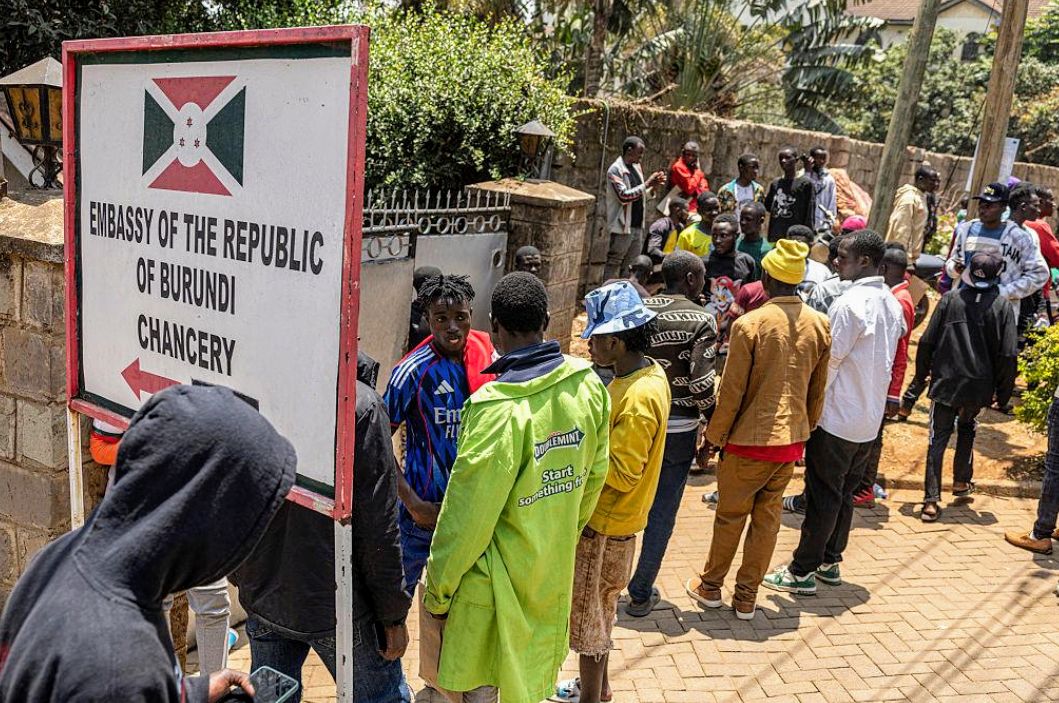
By Gilbert Manirakiza
Kenya moved within a week to contain the fallout from a presidential statement that had thrown foreign traders into panic, offering what analysts describe as a rare example of fast, coordinated crisis management in a region where such episodes have often spiralled out of control.
President William Ruto told a gathering of small-scale traders on September 2 that foreign nationals should stop hawking goods and running neighbourhood shops. The remarks touched a nerve familiar to fast-urbanising economies across Africa: friction that builds quietly in shared markets as communities absorb growing numbers of immigrant traders, long before any formal policy catches up with it.
The reaction was immediate. Burundian and Congolese traders reported harassment. Some shops shut down. Long queues formed outside the Burundian embassy in Nairobi’s Kilimani area, as families sought travel documents amid fears they might need to leave.
By September 8, the government had shifted course. State House spokesperson Hussein Mohamed announced that foreign business owners would have ninety days to regularise their immigration status, work permits, business registration and licensing documentation.
Mohamed said every business operator in Kenya was expected to meet immigration, work-permit, registration and licensing requirements, and that the government would carry out an “orderly regularisation exercise” over the following three months.
Foreign Affairs Principal Secretary Korir Sing’Oei travelled to the Burundian embassy in person to acknowledge the harassment some traders had faced. Government spokesperson Charles Owino confirmed the Ministry of Foreign Affairs was coordinating directly with diplomatic missions on identity registration for undocumented nationals, and warned security agencies, local authorities and the business community against any harassment of foreign nationals, whether documented or still in the process of registering.
Three features of that response stand out to observers of crisis governance on the continent.
The first is speed. The gap between the initial statement and a structured, government-wide correction was measured in days, not weeks. In many jurisdictions, community friction around immigration is left unaddressed until a political flashpoint forces the issue, and the state’s response to the resulting disorder lags even further behind.
The second is specificity. A ninety-day window tied to concrete document categories, immigration status, work permits, licences, gives traders on both sides something to plan around, rather than a vague assurance that problems will be resolved in time.
The third is balance. Officials have been careful not to dismiss the tension that produced Ruto’s remarks. Businesses without proper documentation are, in the government’s own language, outside the law. At the same time, officials have stressed that foreign residents who have lived and worked in Kenya for years, and in many cases intermarried with Kenyans, deserve protection from harassment.
That combination invites comparison with South Africa, where recurring waves of violence against foreign-owned shops in Johannesburg and Durban have followed a very different pattern: rising informal-sector competition left unaddressed, a slow or absent state response once tension surfaced, and vigilante violence filling the vacuum. The reputational and economic costs of those episodes have persisted for years.
Kenya has its own history of similar flashpoints. A 2016 outburst by a Nairobi legislator against foreign traders prompted a formal diplomatic protest from Tanzania. A viral video in July of this year showing a Kenyan man confronting a Burundian tea vendor triggered a nearly identical cycle of public anger followed by official reassurance.
What differs this time, officials and analysts say, is the coordination and speed of the response once the tension became public, not the absence of tension itself.
The test now shifts to implementation. Ninety days is a firm deadline, and how the exercise is administered, whether it becomes a genuine pathway to compliance or a bureaucratic bottleneck, will determine how this episode is ultimately remembered.