
 Digitnomics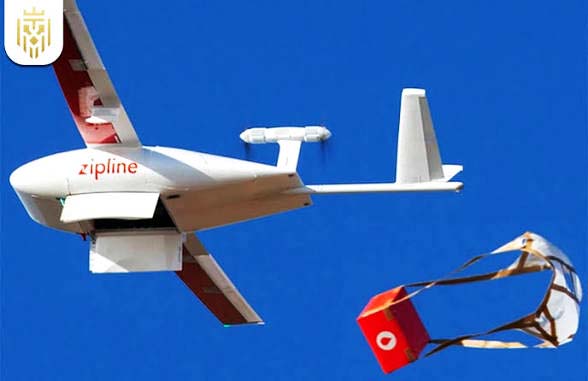
By Francisca Anuforo,
Drone delivery company Zipline is preparing for a major expansion in Nigeria, with plans to build 12 additional distribution centres as it shifts from state-based healthcare pilots to what it describes as a nationwide logistics infrastructure network.
The California-headquartered autonomous delivery firm said the expansion would increase its Nigerian network from three operational hubs to 15 centres and extend healthcare commodity access to nearly 100 million Nigerians by 2028.
The move positions Nigeria as one of Zipline’s biggest growth markets in Africa and reflects the company’s evolving strategy beyond isolated drone deployments.
Zipline’s newly appointed Nigeria Country Director, Anthonio Pinheiro, disclosed the plans during a virtual media engagement, noting that the expansion is designed to connect up to 20,000 health facilities nationwide.
“Right now, with the three states we operate in — Kaduna, Cross River and Bayelsa — we are serving over 1,300 health facilities and about six million people,” Pinheiro said.
“The vision is to build an additional 12 distribution centres, which would serve up to 20,000 facilities and give access to 100 million people.”
From pilots to infrastructure
Zipline entered Nigeria in 2022 through healthcare-focused drone delivery operations supporting medical supply distribution in underserved communities.
However, the company now sees itself evolving into a broader logistics and artificial intelligence-powered infrastructure provider.
“Every company reaches a pivotal point where it changes how it approaches the market,” Pinheiro said. “For Zipline, that’s where we are.”
The company currently operates in Kaduna, Cross River and Bayelsa states, delivering vaccines, blood supplies and essential medical commodities to remote facilities.
Its new strategy seeks to move beyond fragmented state partnerships toward a more integrated national framework supported through collaboration with federal health authorities and international partners.
Zipline said its Nigerian operations are increasingly built around artificial intelligence and robotics rather than drone technology alone.
“Zipline is an AI robotics infrastructure company,” Pinheiro explained.
“A lot of people think about drones, but our drones are autonomous. Our entire infrastructure is built on artificial intelligence and robotics.”
Beyond healthcare, the company hinted that future applications could extend into agriculture, animal health, e-commerce and broader logistics operations once the network matures.
Solving Nigeria’s last-mile healthcare challenge
At the heart of Zipline’s expansion lies a longstanding problem in Nigeria’s healthcare system — unreliable last-mile medical supply delivery.
Many health facilities, particularly in rural communities, struggle with recurring shortages of vaccines, blood supplies, maternal health products, anti-venom and malaria medication.
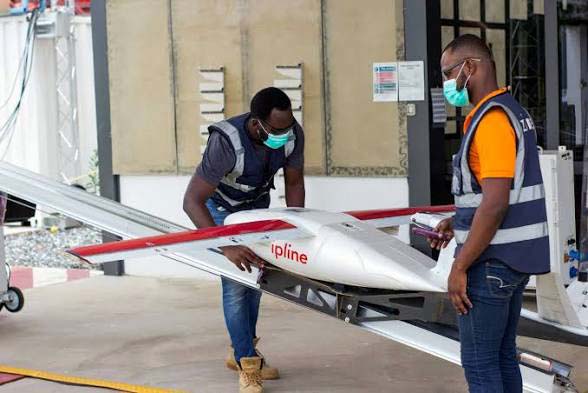
Rather than requiring hospitals to maintain expensive inventory systems, Zipline manages medical supplies centrally and delivers commodities on demand through automated distribution hubs and AI-powered inventory systems.
“If a hospital requests 20 vaccine doses and 25 patients show up, they can call us, and we can deliver the additional five within 30 to 45 minutes,” Pinheiro said.
“There are no missed opportunities.”
According to the company, the model has contributed to lower vaccine stockouts and faster access to emergency medical supplies in supported areas.
Pinheiro cited examples involving emergency blood delivery and anti-venom deployment to remote hospitals, arguing that the system directly supports life-saving interventions.
“These are people who otherwise may not have survived,” he said.
“We are not just flying drones. We are saving lives.”
Energy and operational efficiency
Zipline also says its Nigerian facilities are designed to operate independently of unreliable national power infrastructure.
Its hubs in Kaduna and Cross River currently run on solar energy supported by backup systems.
The company argues that while drone operations are often viewed as expensive, centralised logistics and renewable energy systems create broader cost savings for governments and healthcare providers.
“We end up being more affordable because of the operational efficiencies we create,” Pinheiro said.
“States reduce storage costs, reduce transportation costs and get much more visibility into healthcare utilisation.”
The facilities also support nearby communities and healthcare centres, effectively functioning as mini energy ecosystems in some rural locations.
Regulatory collaboration
As autonomous aviation expands, regulation remains one of the sector’s biggest challenges.
Nigeria currently requires drone operators to secure approvals involving national security and aviation regulators.
However, Pinheiro described the country’s regulatory environment as increasingly collaborative.
“I see those policies as issues of national security,” he said.
“The government wants to protect Nigeria’s airspace, and rightly so.”
According to him, Zipline works closely with aviation and government authorities to define operational corridors and ensure compliance with national airspace requirements.
He believes Nigeria is reaching a critical moment where policy, technology and healthcare demand are aligning.
“Nigeria is more than the big cities,” Pinheiro said.
“There are people in riverine communities and hard-to-reach areas that still cannot access healthcare quickly.”
For Zipline, the expansion signals more than growth in drone delivery. It reflects an attempt to build the logistics infrastructure that could underpin faster healthcare access and, eventually, broader autonomous delivery services across Nigeria.